Vessel

Switch puzzle/physics games have always had a special place in my heart. You can usually find them piled next to things like my mental versions of political figures I dislike, or my memories of Star Wars Episode II–you know, things that I like to take out every so often when I’m bored in my head and burn just for fun. It took very little time for me to determine that Vessel would be added to this pile.

Yes, I’m a little (maybe a lot) biased. I did just admit that I don’t like these kinds of games–but maybe let me explain a bit about Vessel and myself, and you may understand why.

Vessel is inherently a game where you play as some nameless white guy who runs around and hits switches and pulls levers. I suppose he has some backstory of being some great inventor, but it doesn’t really matter to the game at all. I could have been playing as Calvin, the bag-boy from the local grocery store, and the game wouldn’t have changed much. In fact, I think I’ll just start calling the inventor Calvin. At least it makes *me* laugh.

So Calvin is sitting in his lab, possibly reminiscing about his past achievements–the invention of a strange aquatic creature called “Fluorous”–when one of the Fluorous lock him out of his lab, leading him on an… “adventure” (by the loosest definition of the word)… where he must get back into his lab. Along the way, he’ll hit switches. He’ll open doors. He’ll pull levers and walk through more doors. If you’re lucky, you’ll get to spray water at something in random orders until, eventually, it might open another door. This inherently is the problem with most puzzle games in general but specifically Vessel–what is my motivation? What is my goal? Why do I care? I know nothing of the character, he isn’t that likeable, the Fluorous aren’t really interesting, and after 5 minutes I already know exactly the kind of game I’ll be playing.

“Oh, but what of the water physics? They’re neat, aren’t they?” I suppose to some degree they are, but what does it matter? I’ve never understood why physics justify the existence of a game. Physics are simply that–physics. Companies sell physics engines, but gamers don’t *buy* physics engines, and most puzzle games are essentially just that–an excuse to display a physics engine. If I wanted physics, I’d walk onto my porch a drop a rock off my balcony. “Does gravity still work? Yep, it does.” Fascinating.

One might argue that Vessel displays impressive, or at least “stylistic” artwork. To some degree, this is true–while the design did not appeal to me at all, I can recognize that work was put into the game’s visuals, lighting and layout. While the rooms are basically boxes with switches and buttons, they do try their best to appear interesting, with pipes running everywhere, cave-work in the background, and dynamic shadows/lighting. Yes, one might say that the game is “artistic” or “beautiful.” I could also tell you that the Sistine Chapel is “artistic” and “beautiful,” but I wouldn’t tell you that it makes the Sistine Chapel a good video game.

I guess the biggest crux I have with Vessel and most puzzle games, is that I have to ask the question, “Why?” Why would I want to do this? If you stripped away the graphics–if you stripped away the lighting and soothing music–the actual game “experience” is equivalent to someone locking you in an empty white room filled with buttons and switches, and a PA box overhead says “you can leave when you figure out how to open the door,” and at that point it’s up to me find the correct order to hit all the switches and pull all the levers. Yes, there are generally clues, and yes it exercises problem solving–but so does a textbook–and ultimately at the end of the day, I’m just implementing procedural inputs into a linearly designed path that I have to follow to get to the next set of required procedural inputs and on and on until I can finally see the credits roll. Being a stubborn gamer, I usually do just that–however this time, I decided to break the mold and find my own escape from the crushing loneliness of the underground steam maze.

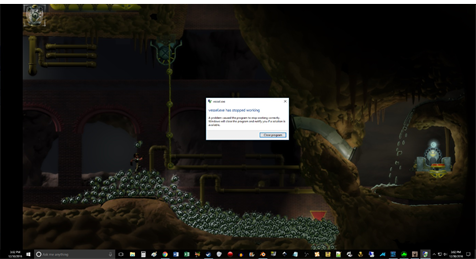
Once I obtained the ability to create Fluorous seeds, I soon discovered that the game allowed you to create an infinite amount of them–better yet, it did not despawn the old seeds. Thusly, I set out to see how many seeds I could create before the game crashed. In truth, I had more fun swimming through my seed sea than any experience I had solving Vessel’s puzzles. After 15 minutes or so, the game crashed, and I finally had my freedom.
Kane and Lynch 2: Dog Days
Short: K&L 2 is a game where you run around in a pretty city environment and shoot people while everyone around you is screaming and shouting things intensely.

Long: K&L 2 is interesting. It’s one  of those games that tries to be a super-serious, hardcore, gritty, gang-war, weapon-selling, drug smuggling simulator where you’re never sure if the antagonists are heroes, or just a couple of tough guys out for themselves in a world that’s filled with horrible things.

Now, we’ve all seen or played this plotline at one point or another before, but the difference between K&L 2 and say, GTA, is that in GTA I can never take the plot or the environment seriously, even though I get the feeling you’re meant to. Let’s be honest–you only do the missions in GTA because you have to, and really you’re just planning the next hooker bar you’re going to shoot up. Here’s where K&L 2 gains my respect–it maintains a more or less completely immersive experience within the environment I’ve described–it doesn’t relent in being an uncomfortable gritty world where the mire is as thick around the heroes as it is the world they live in.

The environments in this game are superb–not strictly from a graphical sense, but from a design standpoint. Layouts feel natural and detailed; desks are lined with believable objects, streets are filled with restaurant tables and stacked chairs. It truly feels real, as you wander through the city streets and in cramped buildings.

The problem is that in its essence, K&L 2 is merely another cover-and-shoot game. It starts off with you interrogating some guy, which quickly leads to taking cover and shooting a bunch of dudes. It then cuts to a car crash where you take cover and shoot a bunch of dudes. Kane and Lynch decide to go visit the gang boss that is harassing them in hopes of figuring out what’s going on–all the while taking cover and shooting all his dudes. You’re at a restaurant… suddenly people bust in and you take cover and shoot. Mechanically speaking, while the game isn’t horrible, it’s nothing new or particularly engaging.

That’s not to say that the game is easy–staying true to its sense of immersion, it’s actually somewhat difficult. You never really feel powerful as you hide behind every piece of cover you can, and if you think you can run into a room and reliably gun everyone down like some superhero (or villain) you’ll quickly find yourself flat on your back in a puddle of your own bodily fluids. That being said, one rather unrealistic feature is that you can soak up more bullets than an elephant could, but considering the intelligent and coordinated attacks executed by your enemies, you need to in order to make the game playable while you learn your way around.

Kane and Lynch are interesting characters, in spite of not really saying much about themselves. I’ll admit to having no clue about any of the previous plot concerning the duo, but the two of them have an uncanny unspoken chemistry between them–something that oddly might be described even in the short time that I saw them, as a trusting love. That being said though, very little of who they are, what they do, or what their motives are, are revealed to the player early on. I have no doubt that there would be some interesting twist, some dark reveal near the third act of the game’s story, but I haven’t played far enough to see it, and I’m not sure I’m really motivated to do so.

In closing, I feel that K&L 2 would probably have made a much better under-funded TV show than a game, if they could somehow have kept the same feeling the game provided and just cut out 80% of the “running around and shooting guys” segments. Kane and Lynch are interesting characters, and I would love to see more of them… I’m just not sure that I’m willing to fight through bloodbath after bloodbath to find out. I would recommend that those who enjoy cover shooters with a gritty, uncomfortable, Pulp-Fiction-like atmosphere give it a try, but otherwise you might, like me, find yourself wishing you could just walk through the well-built streets of China, listening to conversations between Kane and Lynch instead of the sounds of bullets and the F-bomb being dropped every-other sentence.

Exanima


It’s Dark Souls but low-fantasy and isometric.  I haven’t completed my full hour yet (I have a feeling it’s going to take a couple to get a good feel for it), but for now it goes into Tier One – the atmosphere, music, and seemingly well-simulated world are quite enticing.
Recursed

A good puzzle platformer with a twist – recursion through chests that you can carry into other chests.  Rooms within rooms.  Kinda neat, but ultimately not worth the time it would take to beat except as a diversion when you have nothing else to do.

Steam link

Plankton
 Why did I buy this “game”?

It’s a desk toy masquerading as an interactive experience.  The sum total of your interaction is clicking on a moving piece of plankton.  But you don’t actually have to.  It’ll play itself…albeit more slowly.

Recettear: An Item Shop’s Tale
I can’t recommend this game, and I’m sad about that.

The cast of characters is quirky and fun (after all, “Capitalism, Ho!” isn’t a meme for no reason). But that’s all there is – after the second week or so, I began to realize that the mechanics lack depth and the dungeons are repetitive.

Here’s the long bit:
I have many tiny nitpicks, but the one that is the easiest to point out is that in a haggling game, you would expect … well … haggling. But there are no counter-offers – not even clever dialogue hints as to what price they’re willing to pay (that I was able to figure out, anyway). Instead, they tell you exactly how to beat the game in the tutorial – 125% for selling, 50% for buying (plus or minus 5%). High price items will be 3x the base cost. Low price items are roughly 1/2 the base cost. The Little Girl can’t afford anything. Knock 10% off for heroes.  Even worse, they all have distinct “this price is too high” responses.  Initially, I thought these would line up to how far off of a reasonable price I was.  But no, it’s just random.

And it never varies – if a haggling game makes me want to just put price tags out since there’s no actual haggling involved, then its done its job poorly.

The premise is that you’re repaying a loan and have multiple payment dates – but instead of just penalizing you for being the slightest bit under the amount, it send you back to the start of the game.  I’d be more okay with a Game Over and menu drop, since there is a save system (which almost defeats the purpose of starting over) – but instead, it resets you to day 2 and …keeps your items for some unknown reason.  Anyway – as much charm as there is, I can’t justify finishing it.  I really wanted to like it, and there’s quite a bit of potential.  But it misses the mark.

As an example of the nonsensical mechanics of this game: I buy these armor items from the guildmaster / blacksmith.  Then he comes into my shop and buys them back from me for more than he sold them.  Mr. Guildmaster: You can literally make more for yourself.  These mechanics don’t make sense.

I’m being harsh because I really wanted to like this game.  I expected a lot because of its reputation.