LIMBO (Completed)

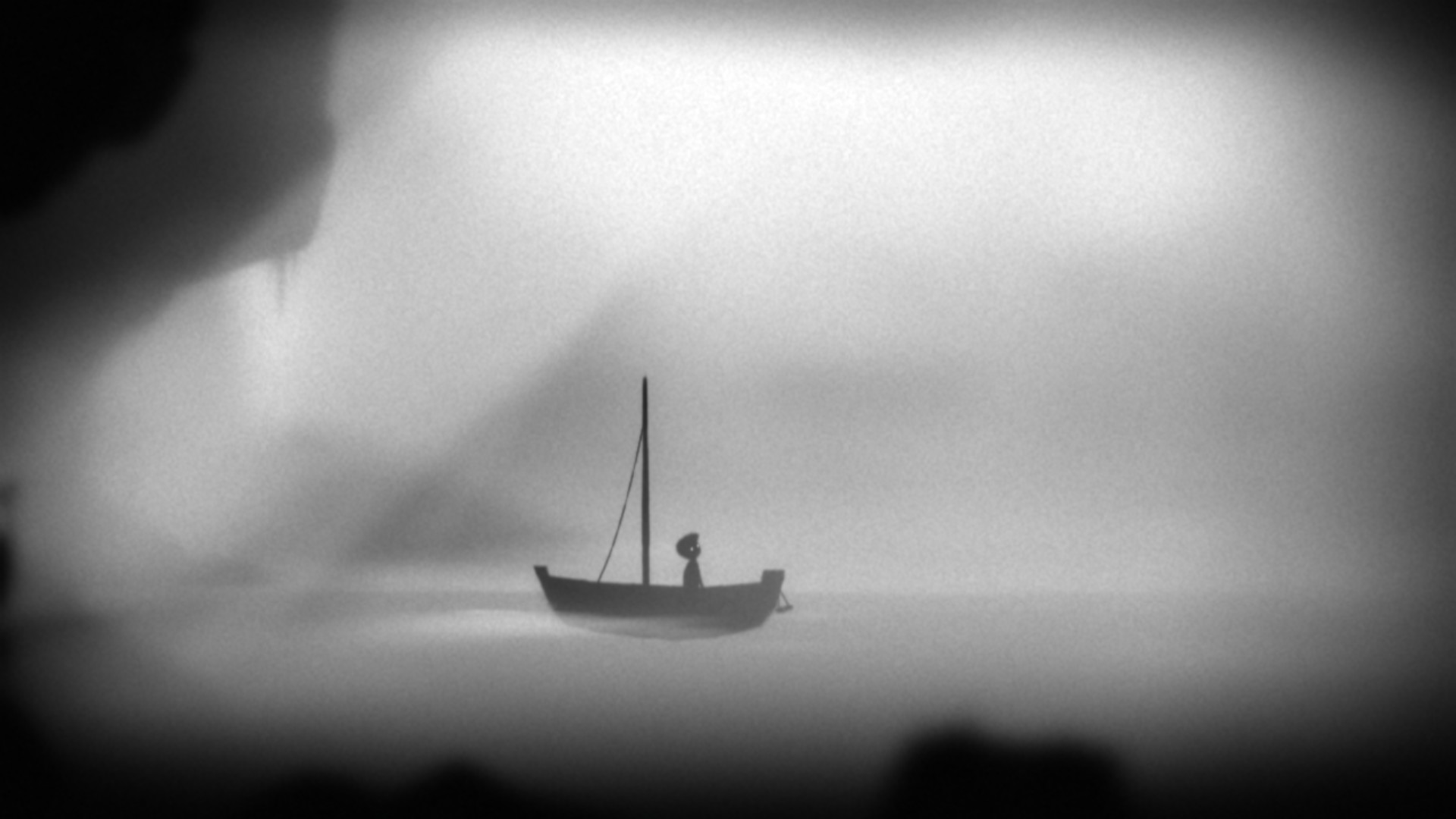
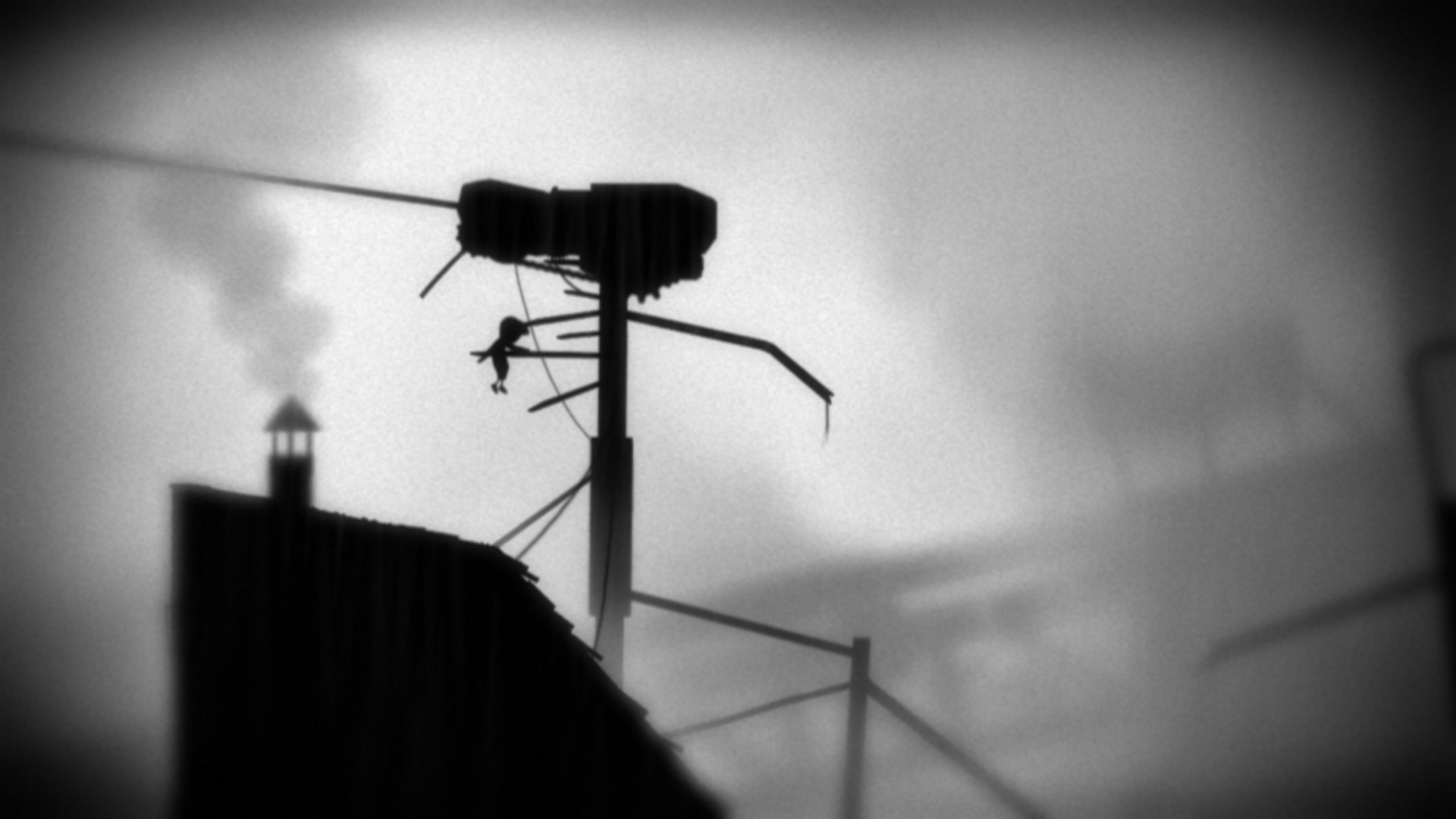
Ever eat a good banana? You know, one that tastes great but isn’t too green or too brown? Well, what if after eating that banana and you got to the peel you didn’t stop–you just stuffed the peel in your mouth and kept chewing. Welcome to LIMBO.


I’ve made this pretty clear in the past, but in case you missed it, I hate puzzle games. There’s nothing appealing to me about discovering a set of linear 1’s and 0’s that I must adjust the input/output for in order to proceed to the next set of 1’s and 0’s. I also think that most platformers are non-appealing rubbish with a forced mechanic of bland platform traversing and obligatory monster head-stomping. LIMBO, as it so happens, is a puzzle/platform game… and it is AMAZING. For the first half.


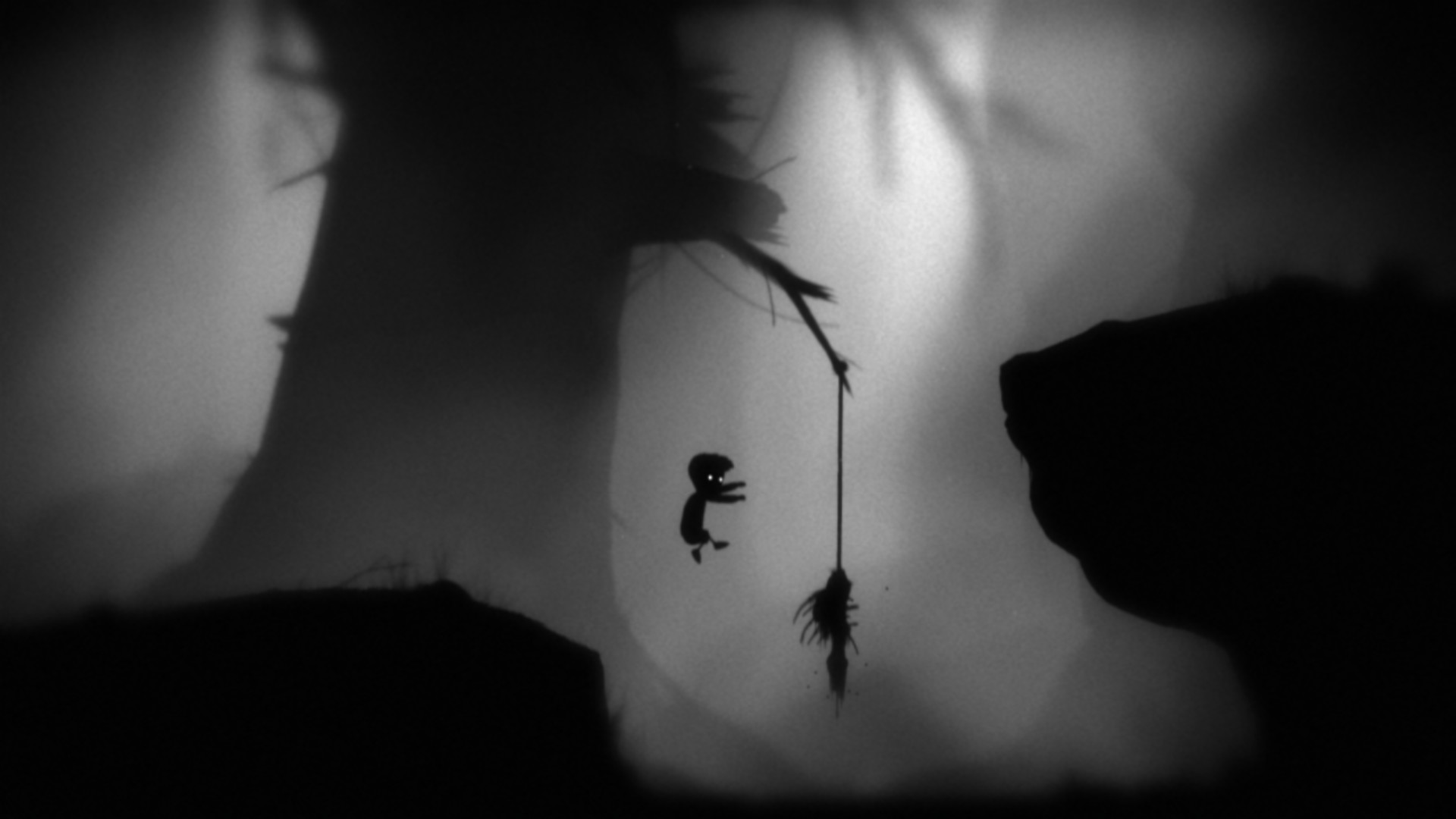
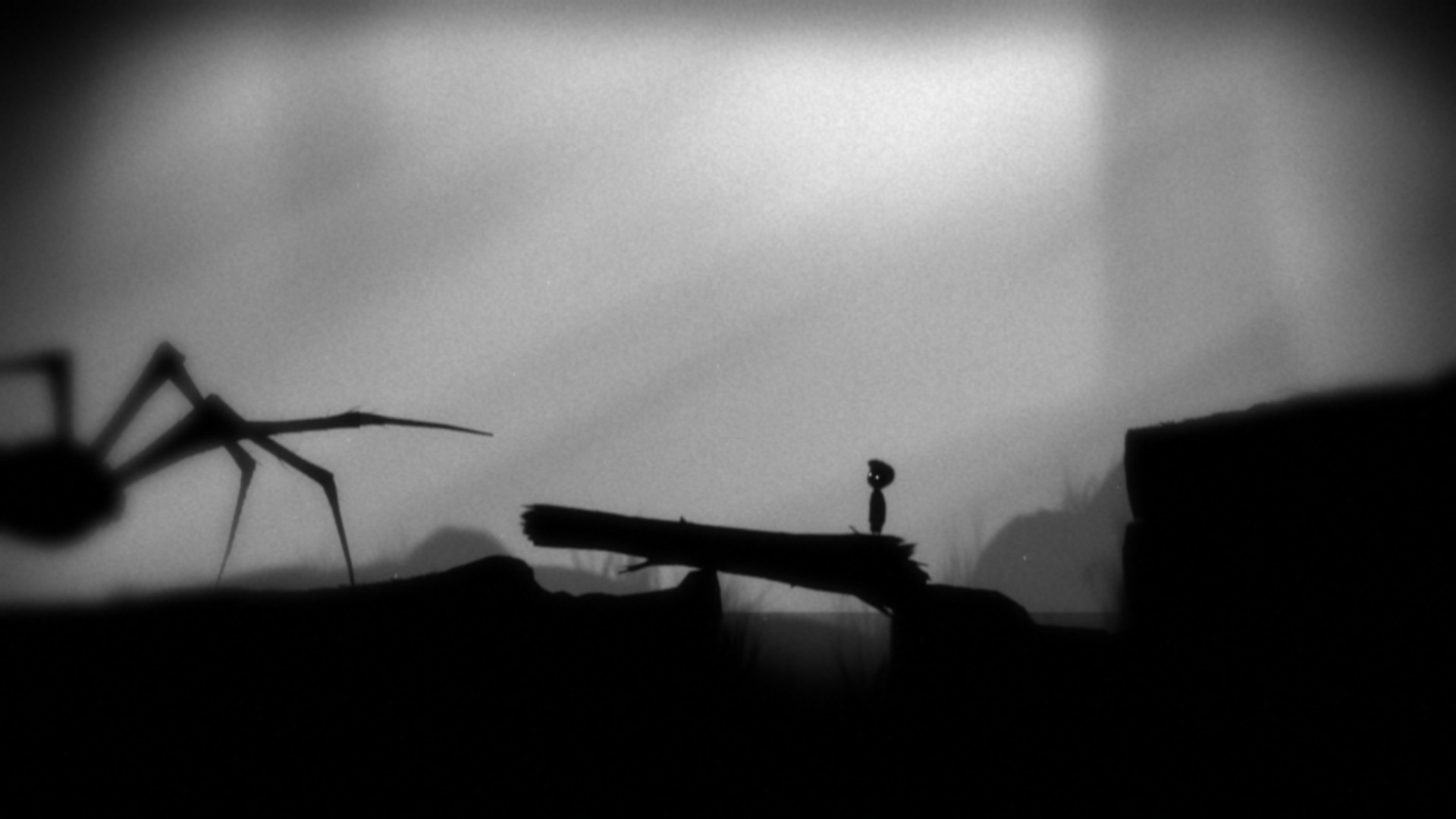
The first swig of LIMBO feels like true and pure exploration of the imagination. It is a set of puzzles that are fresh, simple, non-repetitive and clever. Bear traps, rolling boulders, giant spiders–I never knew what was around each turn and I was eager to see the next challenge. There is never a tutorial  and there never needs to be one. The game uses the D-Pad and two buttons and that’s it. The level designs teach the player exactly what they need to know by building up the player’s knowledge piece-by-piece from what they have previously encountered. The last time I played a Puzzle Platformer this good was when I played Another World for the SNES and I was ready to rejoice the profound similarities. That was until I noticed that I was half-way through the game after only spending an hour playing. I decided it was best just to put in another hour and see how the game ended. That was the where the fall of LIMBO began.


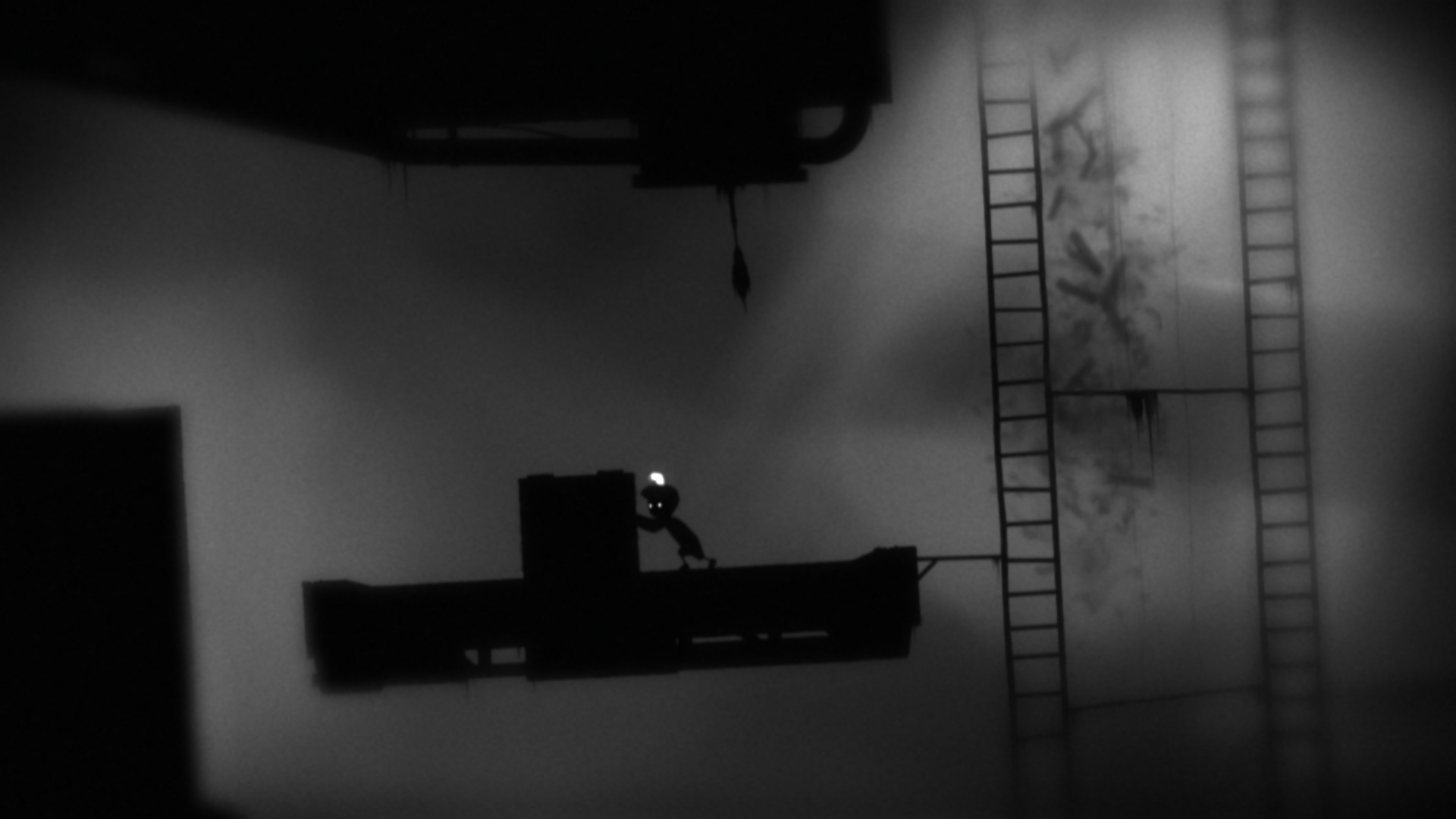
It was past the half-way point that I began noticing that I was pushing a lot more boxes around to solve my problems. There were no longer neat little tricks and traps. Instead, they were replaced with platforming and switches. There was a neat bit where you climb on the letters “HOTEL” from a building of the same name, but other than that the environments are dull and uninspiring. At the end when the obligatory gravity-switching box-pushing puzzle was the game’s finale, I realized that the second half of LIMBO was filth; relegated in my mind to Tier 3 at best. Sure it’s “done well,” but it’s as invigorating as game of tic-tac-toe. Clever traps are replaced by giant buzz-saws. Mind-controlling leaches are replaced with bland pit-falls. All personality and uniqueness is completely screened from the second leg of the journey to the point where I think I would’ve had a better time just playing through the first part twice.


There’s little else to say beyond this as it’s not a long game. Not even the game’s “story” can redeem the ending. The boy you play as finally meets with a female shadow who stands up when he runs up from a distance and then the screen goes black. No explanation, no closure, just a heaping pile of “Ask me what it means!” The first half of this game is easily Tier 1. Given the entire compilation of the game’s contents though, it barely nets Tier 2.

Steam Link


Paper Sorceror

Am I just a sucker for Indie games? Say “Hello” to Paper Sorcerer.


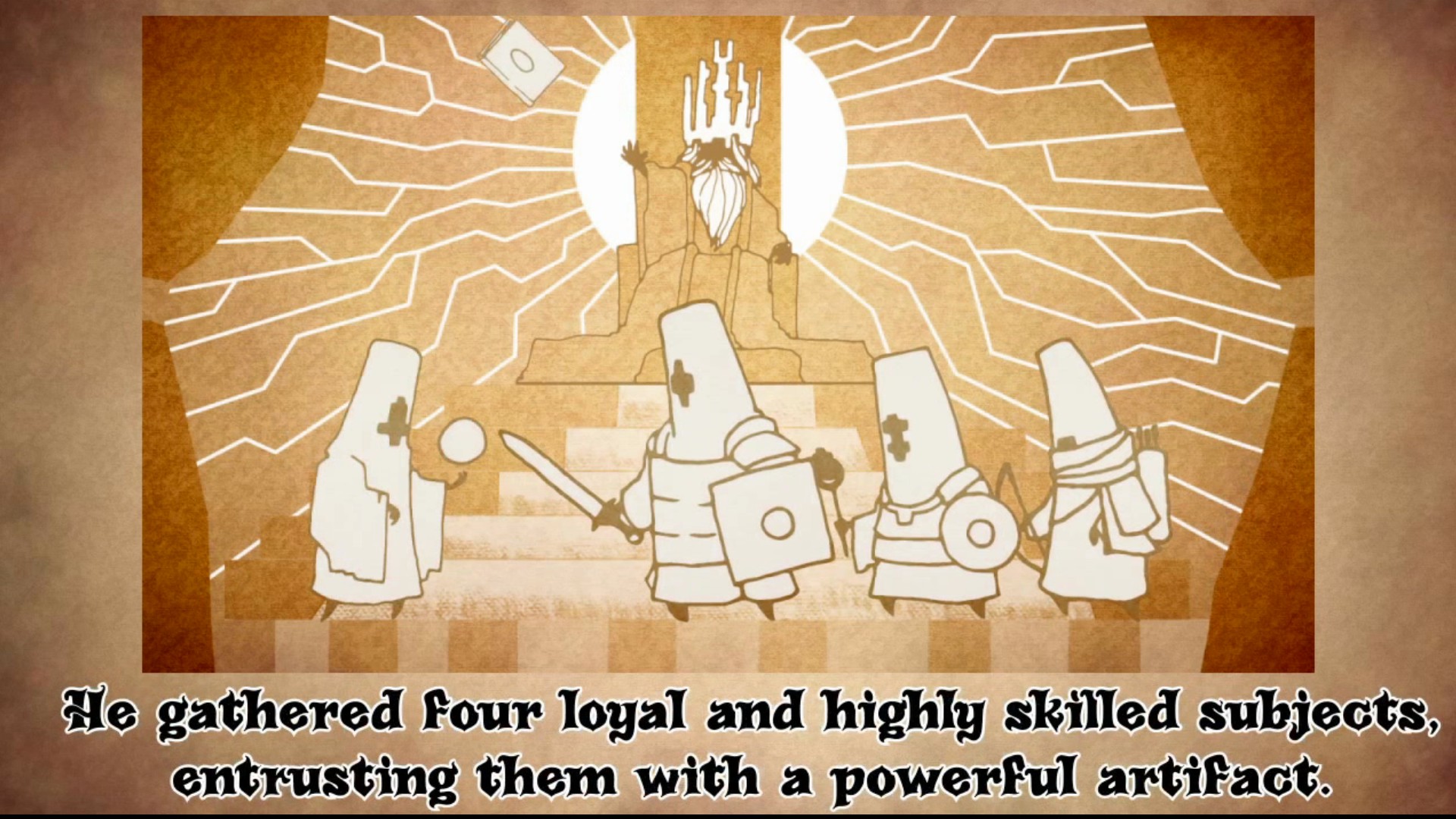
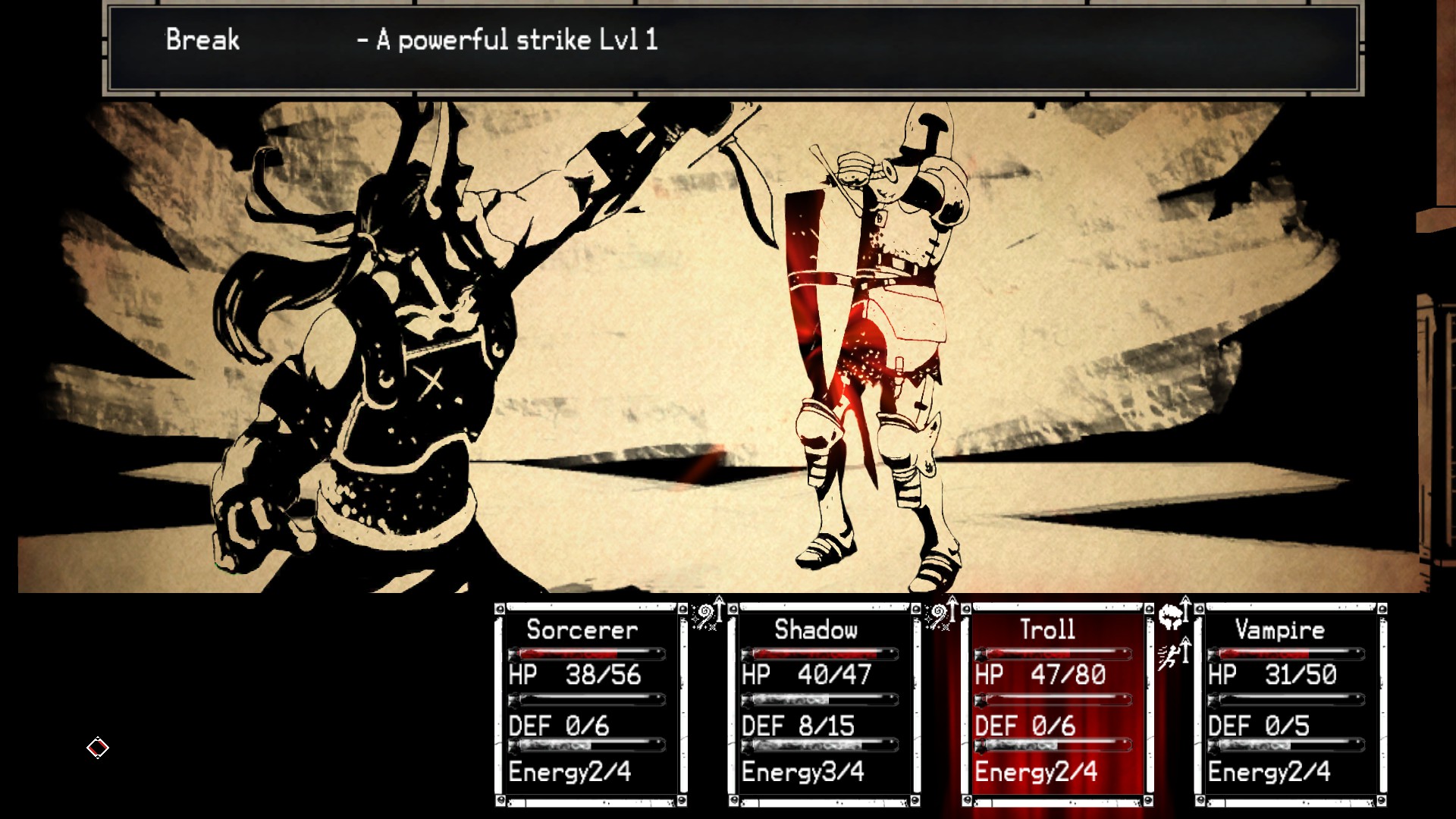
Paper Sorcerer is a rough-around-the edges indie-RPG adventure that bears heavy semblance to the Shin Megami Tensei series or the (more popularly known in America) Persona series. Don’t be fooled by the cutesy Templars above; you won’t even be playing as them. They’re the bad guys.


You play the role of powerful sorcerer who was sealed in a magical book by a party of heroes. The book is a magical artifact that the king uses to seal away unwanted entities that pose a threat to his kingdom. Aside from you, there are a multitude of other creatures locked away in this magical prison. By its design, the prison is supposed to hold those trapped inside in a cell that drains all energy, both physical and magic, until the prisoner loses all power and will to escape. Occasionally, the process fails and a prisoner escapes. In your case, you were released by the “Spirit of the Book,” a woman who originally took the form of a mouse to communicate with you. The Spirit of the Book wants you to go to each section of the book and destroy the bindings one by one until the book can no longer be held together. She promises that when this happens, you and her will escape but I have my doubts as to the integrity of her loyalty.


As stated before, the game shares many similarities to Shin Megami; especially Shin Megami Tensei: The Strange Journey. You play the role of yourself (a sorcerer in this case) and summon demons to fill in the other slots of your party. Unlike Shin Megami, you don’t convince the demons to join your side in combat, but instead summon a new one to add to your team when reaching new levels of the dungeon. Additionally, you don’t fuse the demons together to create new ones. Aside from that though, it’s pretty spot-on. Demons come with a unique set of abilities but you’ll need to use them intelligently to defeat stronger foes. The combat doesn’t exactly seem like a walk in the park either, adding challenge to the gameplay. Of particular interest to me is the way that the game handles “Energy” (MP) and Defense. Energy counts are very low (so far all party members have only had a max of 4) but it recharges by 1 after each combat round and some party members can use a skill to regenerate it. Defense on the other hand is a dynamic stat that can be broken down with multiple attacks. This means that combat has a time-limit of sorts and a stronger foe’s resistance to damage can be slowly whittled down.


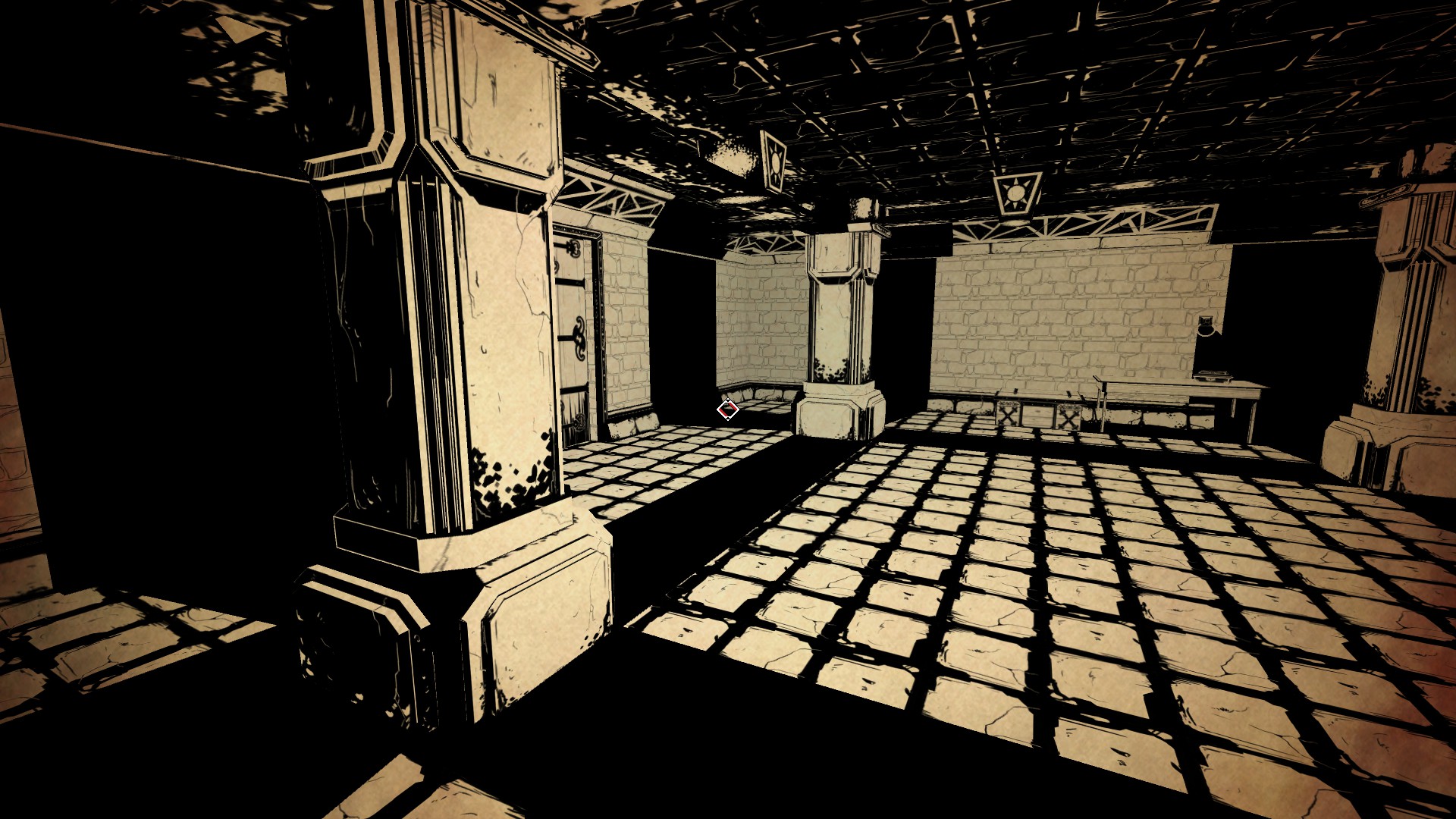
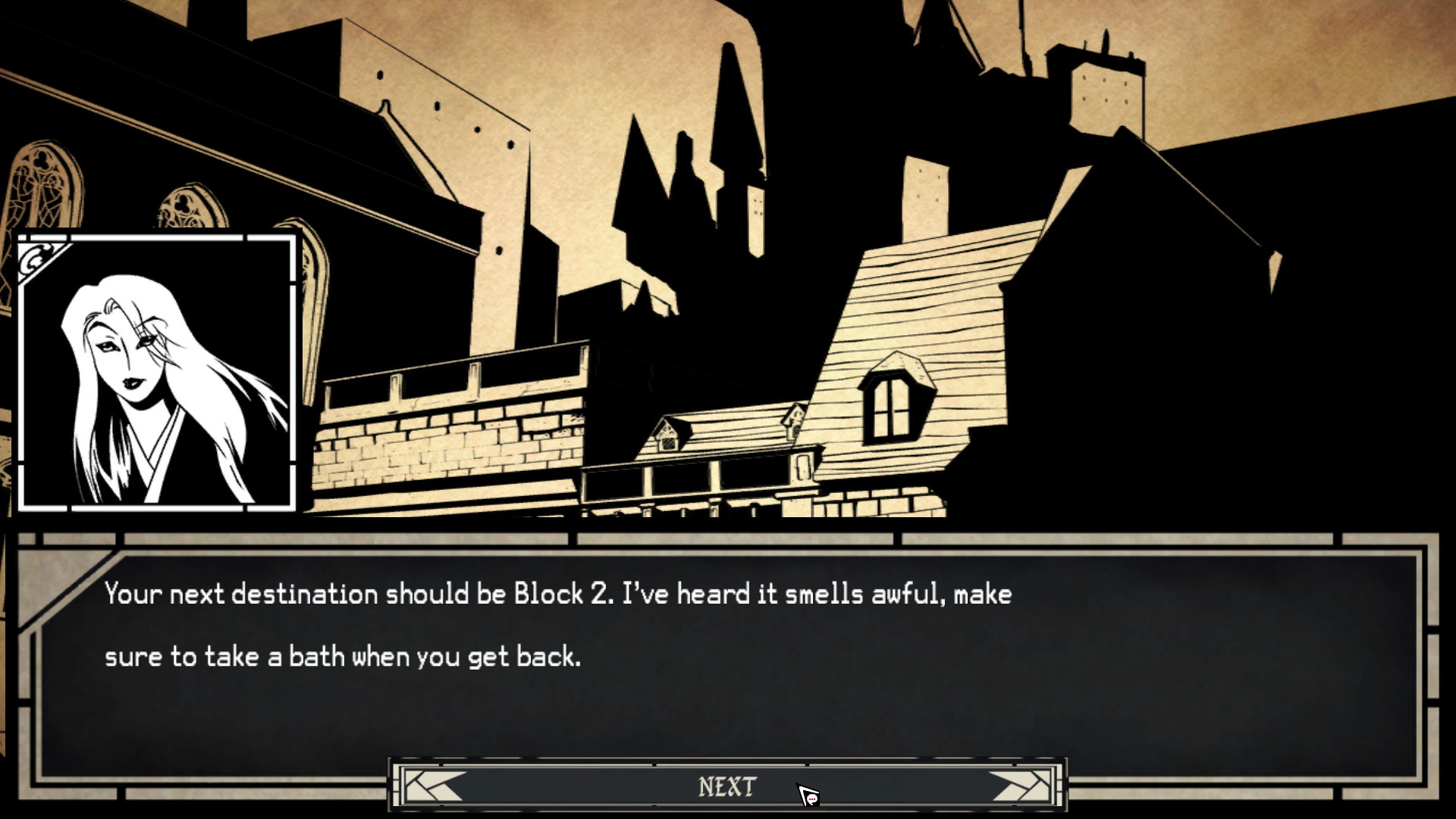
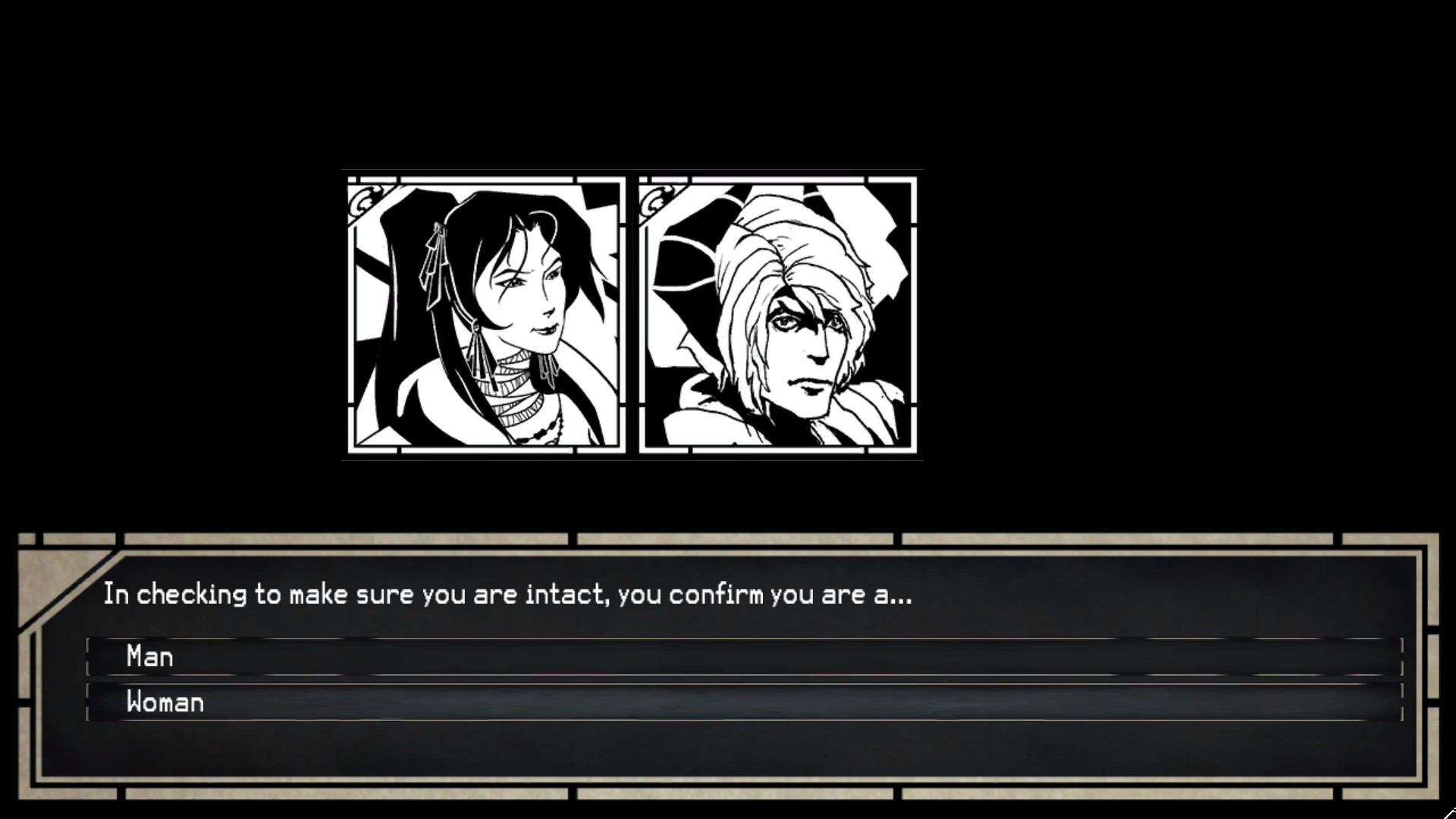
I’m sure you’ve noticed by now, but the entire game is monochrome. (Well, not quite monochrome but close enough.) It lends to some pretty interesting visuals and sets a unique tone for the whole game. It’s very hard to forget that you really are trapped in the pages of a book–in fact, the game’s currency are actually gems that for a few seconds let you see the color and life of the outside world. To those trapped inside, this is more valuable than any commodity found within their papery cells. At times, the art is a bit questionable. This is most notable when looking at some of the character portraits. However, given that there are a decent number of portraits and quite a few animations in combat, it’s easy enough to forgive some of the wonkey faces you might come across.


This game is not amazing, or even fantastic. However, I remind you that the difference between Tier 1 and Tier 2 is not necessarily quality, but personal desire. There are many games of a higher quality than Paper Sorcerer that I’ve placed in Tier 2 but I did not feel a strong desire or need to see more of them. In contrast, when it comes to Paper Sorcerer I wish to see more of its design, how its combat develops and I’m curious of the fate of the world that the game created resulting in its award to Tier 1 .

Steam Link


Heroes of Might & Magic III – HD Edition

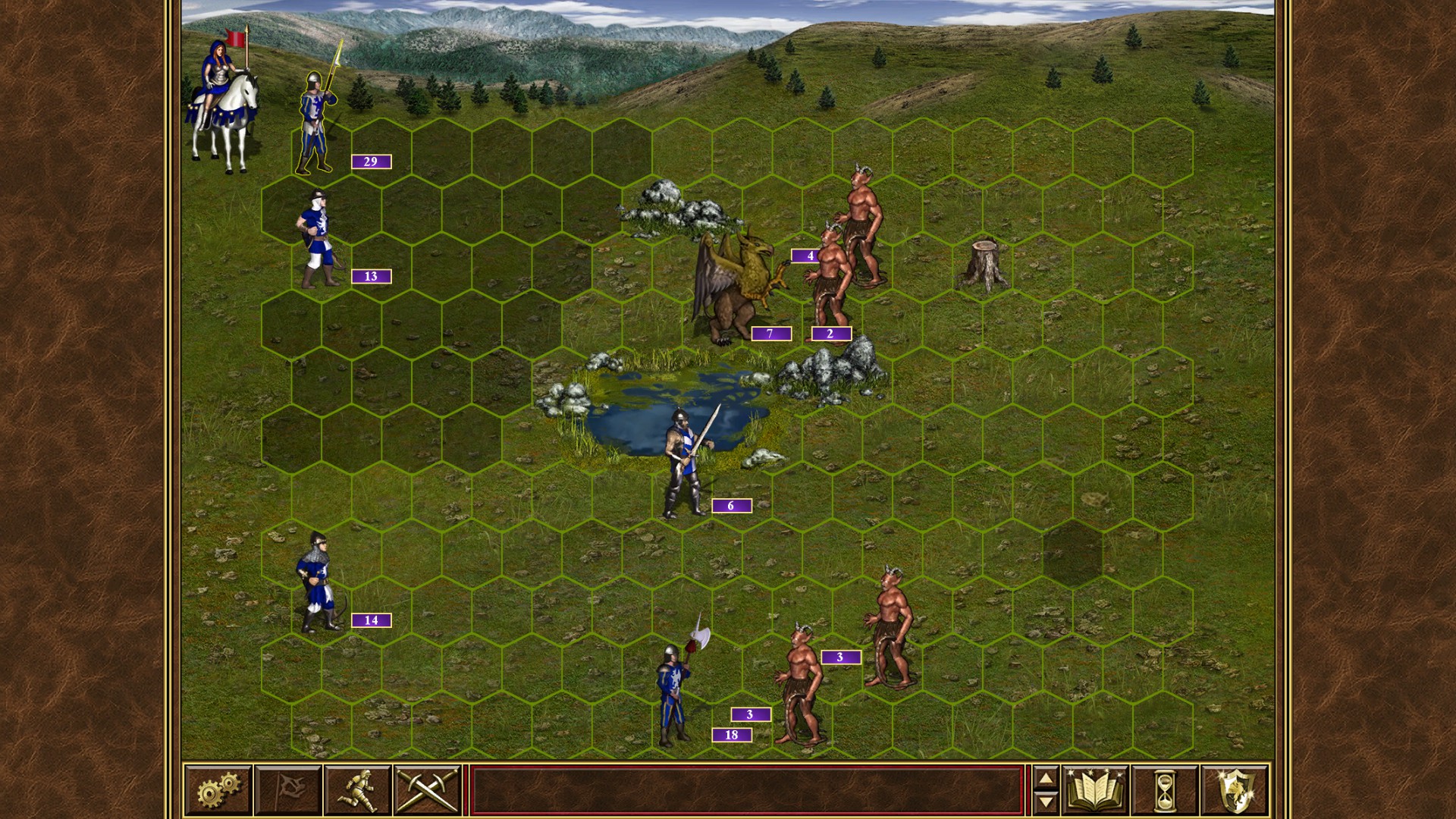
Hang on… am I playing American Fire Emblem? Oh wait, it’s Heroes of Might & Magic.

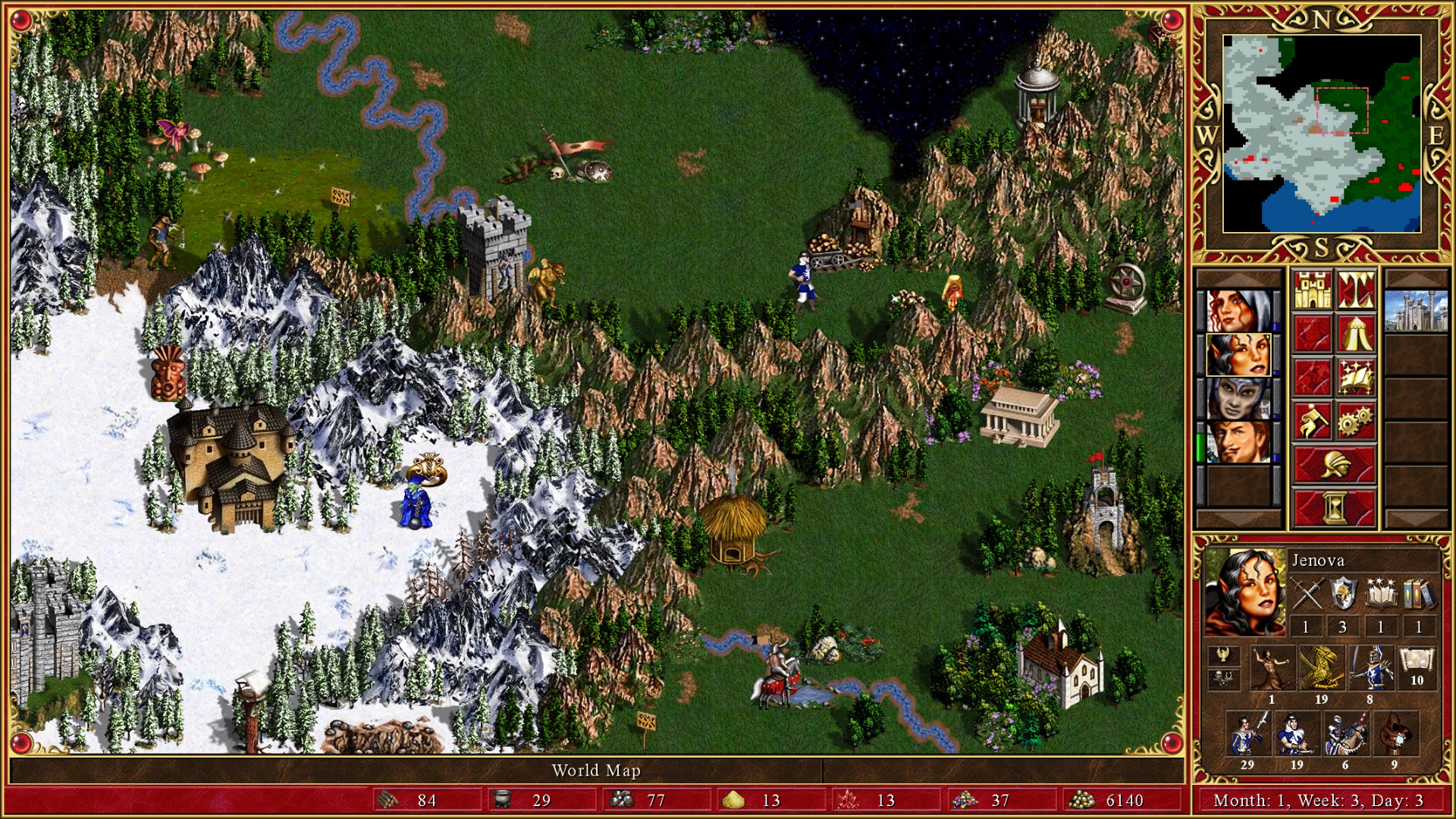
As I said in an earlier review, I hadn’t played a single Might & magic game until about a year ago, when I marathoned Might & Magic VI. That didn’t stop me from hearing this mysterious Might & Magic franchise over and over again when I was a kid. I never could quite figure out what the games were about based on snippets of what I heard other people say. The only thing I could tell is that they had monsters and magic or something. I think I understand why–the MM series encompasses so many different kinds of games that I there doesn’t seem to be a single genre that’s outside this franchise’s reach. First-Person RPGs, First-Person Party-Based RPGs, First-Person Grid-Based RPGs, Puzzle-Matching Tactics games–and now, a Warcraft, Civilization, Fire Emblem-esque RPG adventure hybrid called “Heroes of Might & Magic III.”

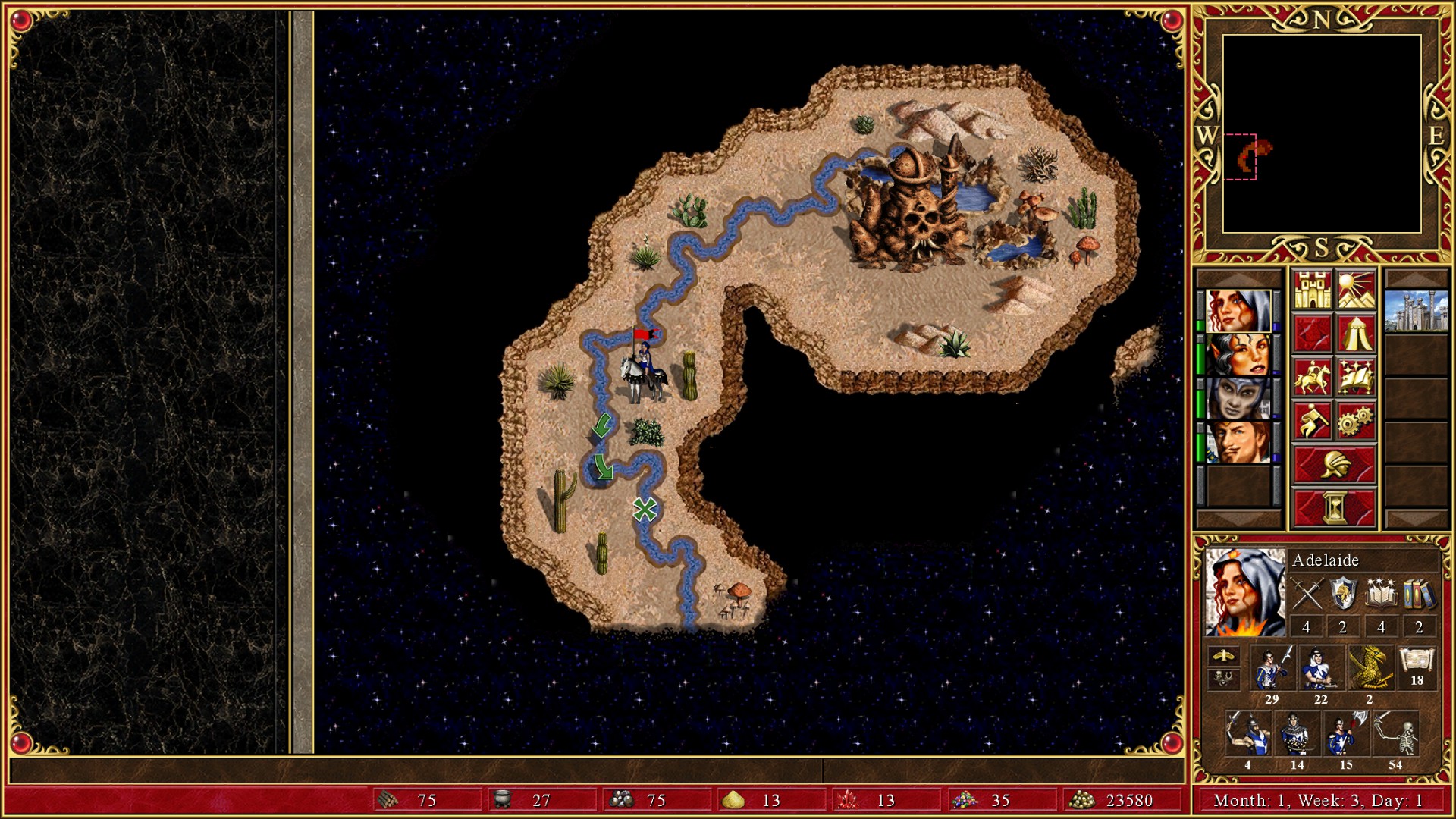
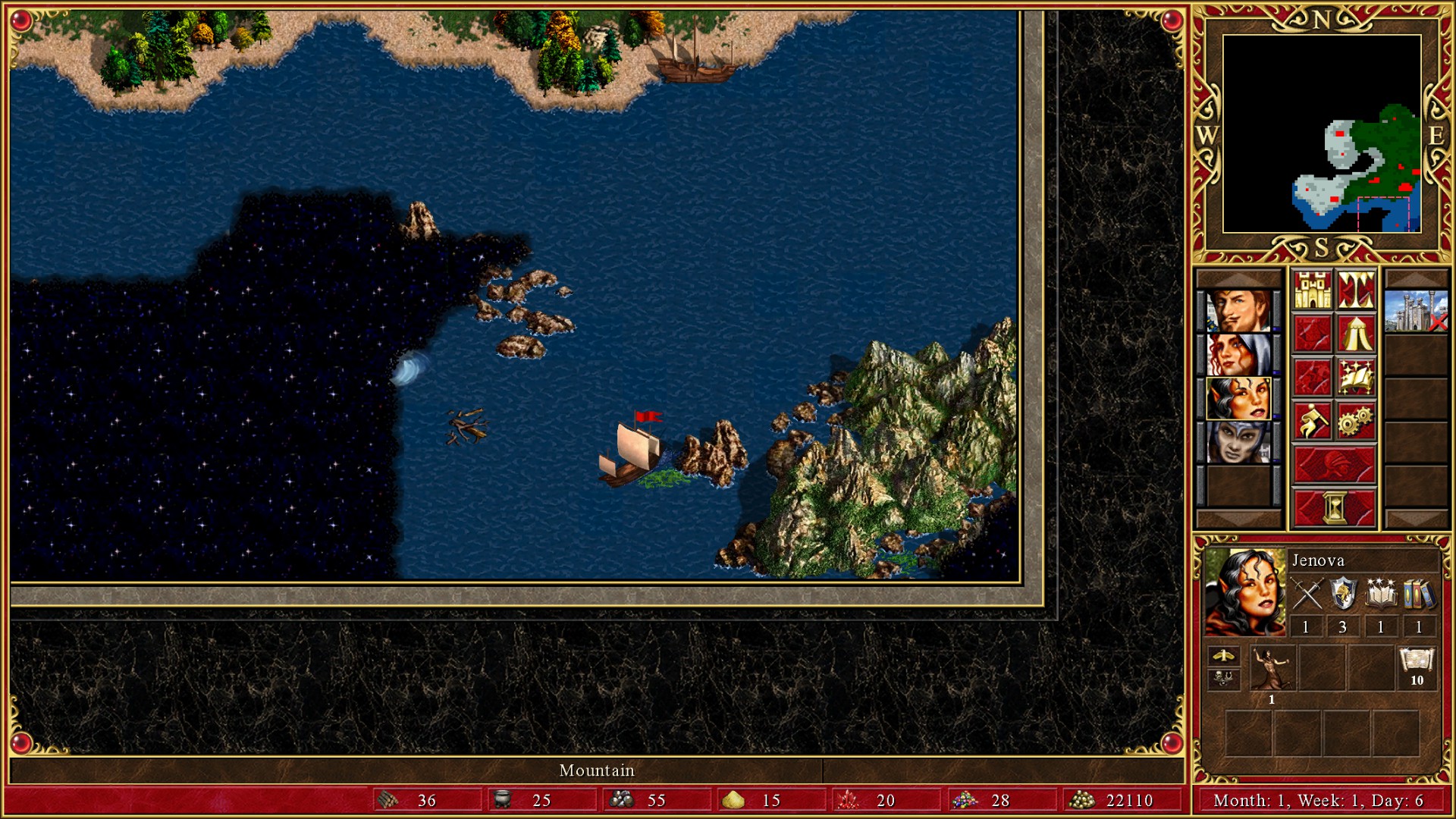
HoMM III is a fantastically detailed micro-world of mythical creatures, powerful treasures and vast landscapes. The goal, as far as I can tell, is to move your heroes around the map gathering treasure and recruiting an army until you clash with the opposing kingdom that waits for you on the other side. Heck, I can’t even say that the Kingdom waits for you–I clearly saw some strange demonic creature riding around the map, investigating treasures and capturing buildings the same as me, so I guess the enemy has the same tools as you do to fight against you. I say “as far as I can tell” though, since in spite of playing the game for 2 hours I’m about halfway finished with the first level of one of the 5 campaigns. It’s clear that this game is long, and would require a pretty heavy time investment to figure out what else goes in within the game.


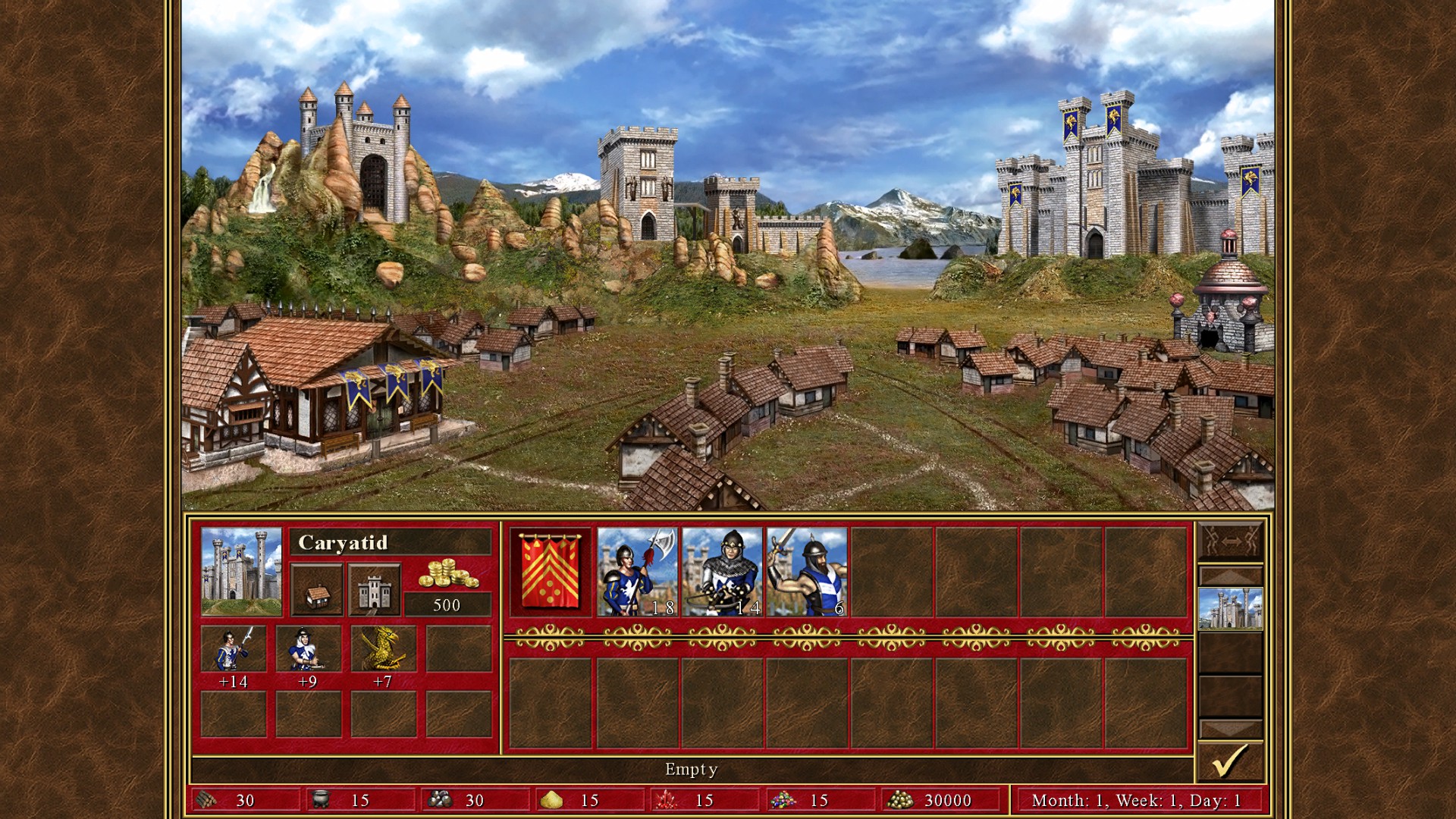
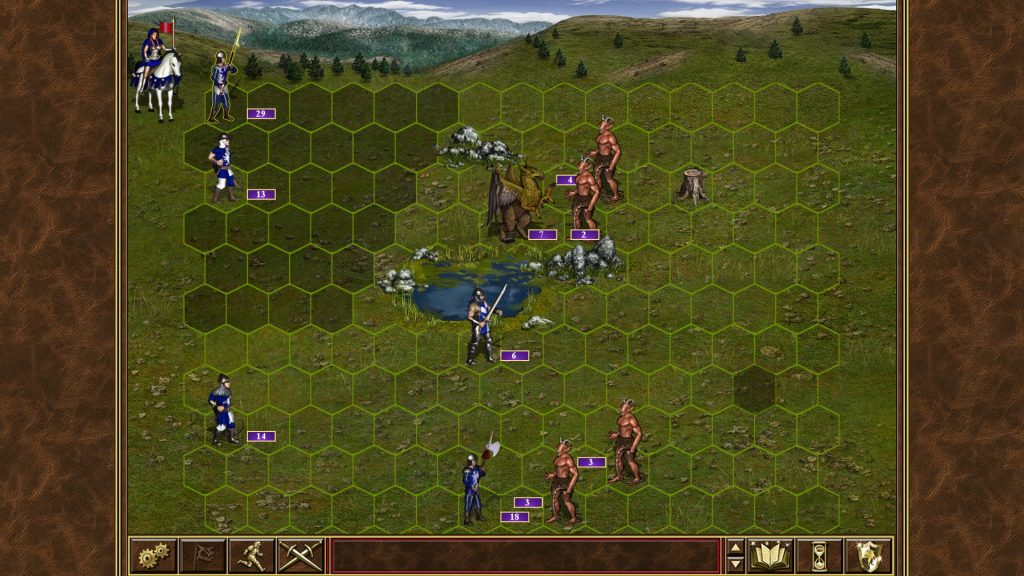
The game may seem confusing at first, but every single thing you can left-click on can also be right-clicked to get a description of what it does mechanically, meaning that with a bit of reading you’ll be adventuring into the unknown in no time at all. I’m impressed that a game so detailed was built so clearly that I actually could learn this quickly in spite of the myriad of facets to the game play. On the one hand, it’s like Civilization in that you build up your city, building various structures within its walls. It’s also a resource management game, as you’ll need to find or capture a variety of materials in order to produce useful buildings. On the other hand, it’s a fog-of-war exploration game, with the need to venture out into the unknown and discover spells, upgrades and artifacts. Further still, it’s a hexagonal army-based take-turn combat game, requiring tactical use of spells and, of course, the army. It’s also a party-generated RPG in that you recruit heroes from a random pool at the tavern, each with a different class and set of skills who in turn level up with each victory to acquire more talent. In spite of all these pieces, they fit together seamlessly and create a rather pleasant experience.

The game is not without faults though. It’s a bit sluggish at times so you’ll need to be patient. For example–some battles are very interesting. Other battles, you know you’ve won, but it takes another minute for the fight to play itself out. Another instance is troop recruiting; you need to wait a week before getting more soldiers in a town, which can lead to a hero just waiting around in a city for the week to end. Mechanically, these choices are sound–you’ll just need to take it slow. Another point of conention I have against the game are the powerups. While technically it would be my choice to do so, I can’t help but feel annoyed that I must have each hero visit all of the non-expendable treasures in order to get their permanent bonus. Once again, this is a mechanically sound point of the game. Maybe it’s just my own obsession, but I’m constantly worried that I forgot to have a hero visit one the powerups and I’ll have permanently missed a stat boost. Lastly, the game feels a bit like walking into a dark room at times. Since I have no knowledge of what my units do, what the map looks like or how strong an opponent may be that, to a degree, I simply just move around and click on things until something happens. I don’t really deserve to win, nor do I deserve the treasures I keep picking up–I don’t know enough about what’s going on to actually claim these victories entirely as my own. It’s possible that with time and familiarity of the game I would begin to develop a strategy or a technique but even after 2 hours I was just hoarding treasures and powerups because the game was nice enough to give them to me, not because I had earned them.

Oh. And there are boats. They’re a lot of fun.

HoMM III really shows me why I kept hearing about the MM series. For a game this old to have received a 2014 HD remake and for it to be this fun even today makes me feel like this must have been the Zenith of the MM series. I’m placing it in Tier 2 but only because it is my preference to play a game with a bit more challenge and a bit less of a time investment. HoMM is a fantastic game and I strongly recommend trying it out. It would be a perfect fit if I have a sleepy day off in the future and nothing else to do.

Steam Link


Return to Castle Wolfenstein

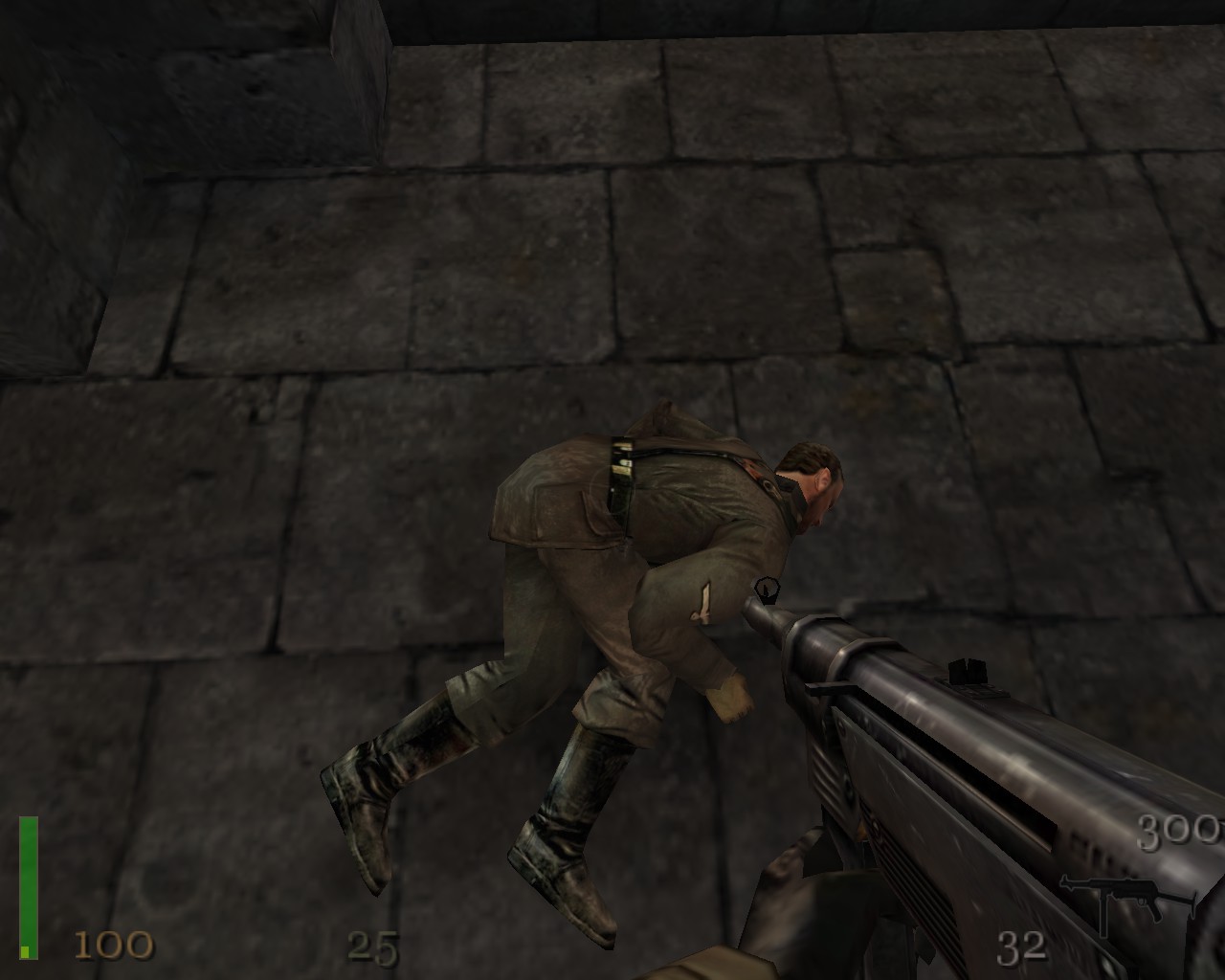
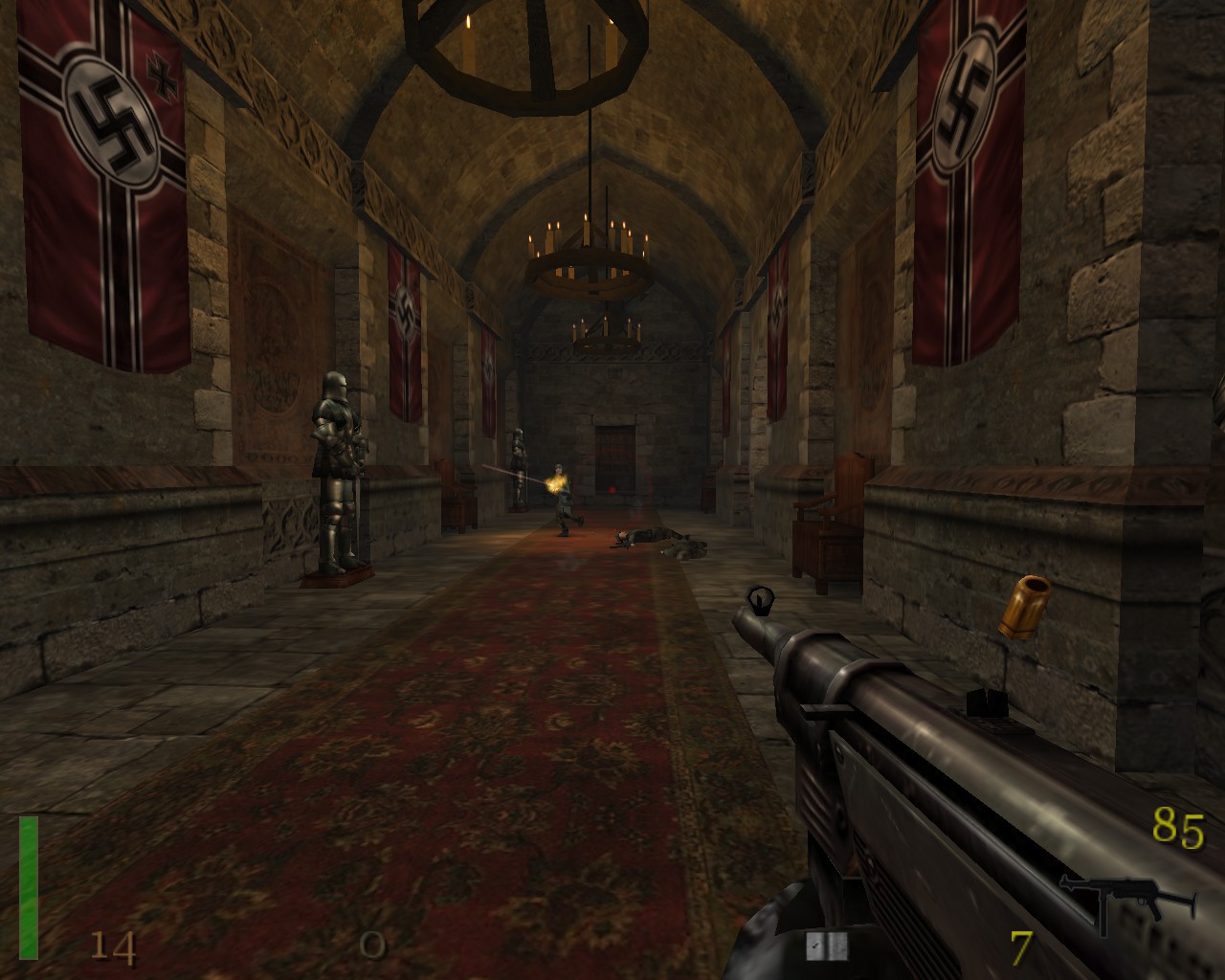
Holy crap. It’s been so long since I’ve played an FPS that wasn’t poisoned by Call of Duty that I’d forgotten that FPS’s could actually be fun. Enter Castle Wolfenstein.


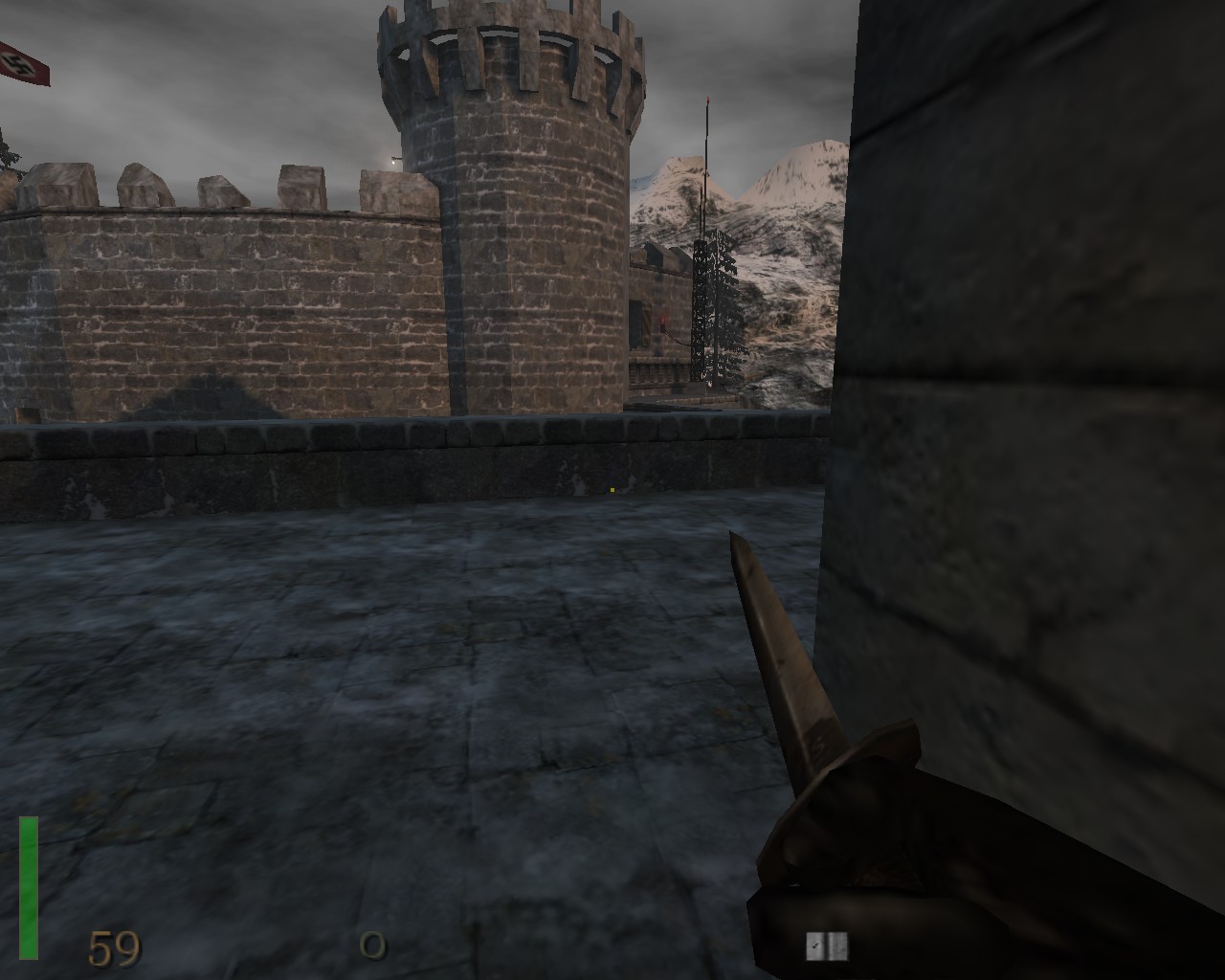
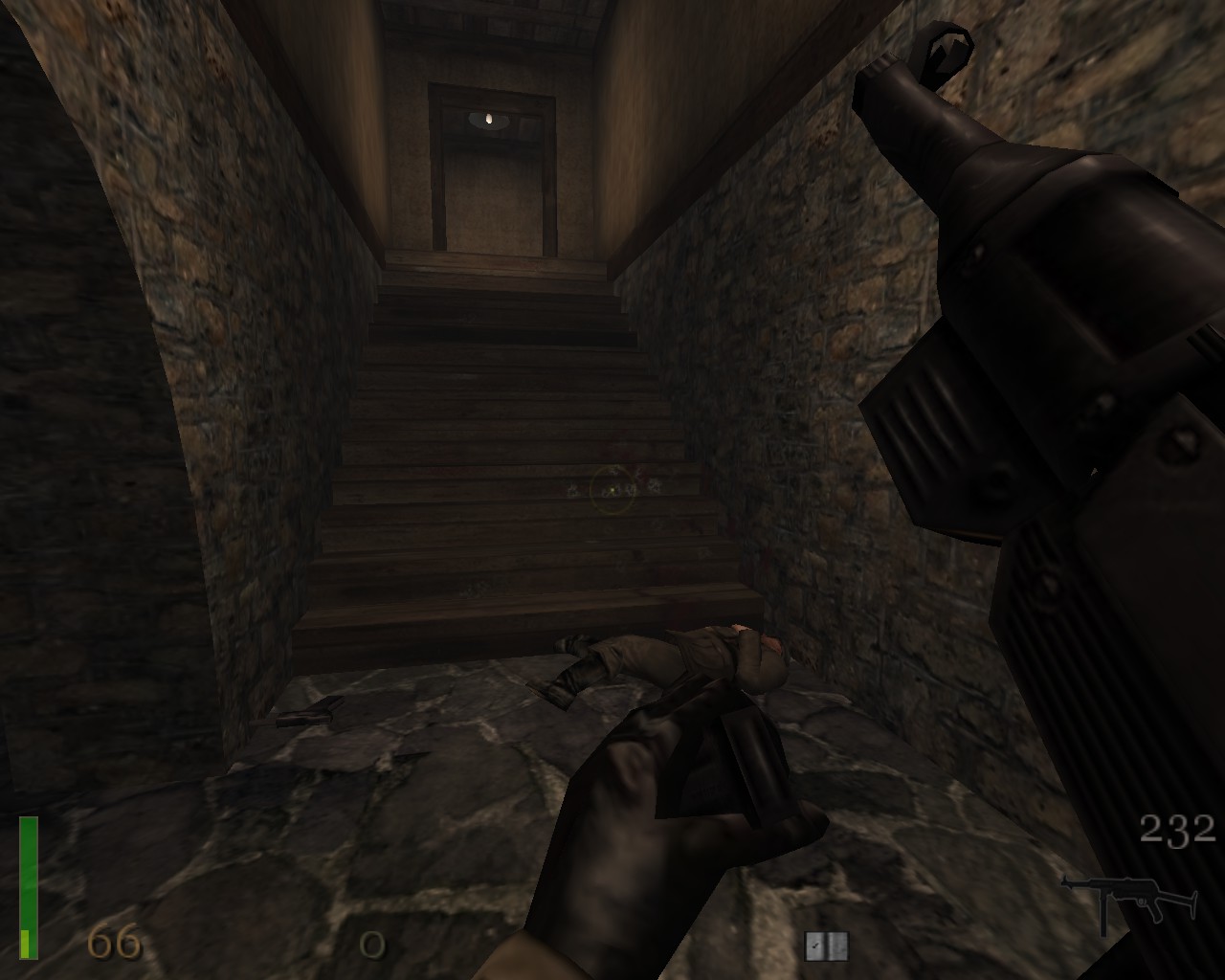
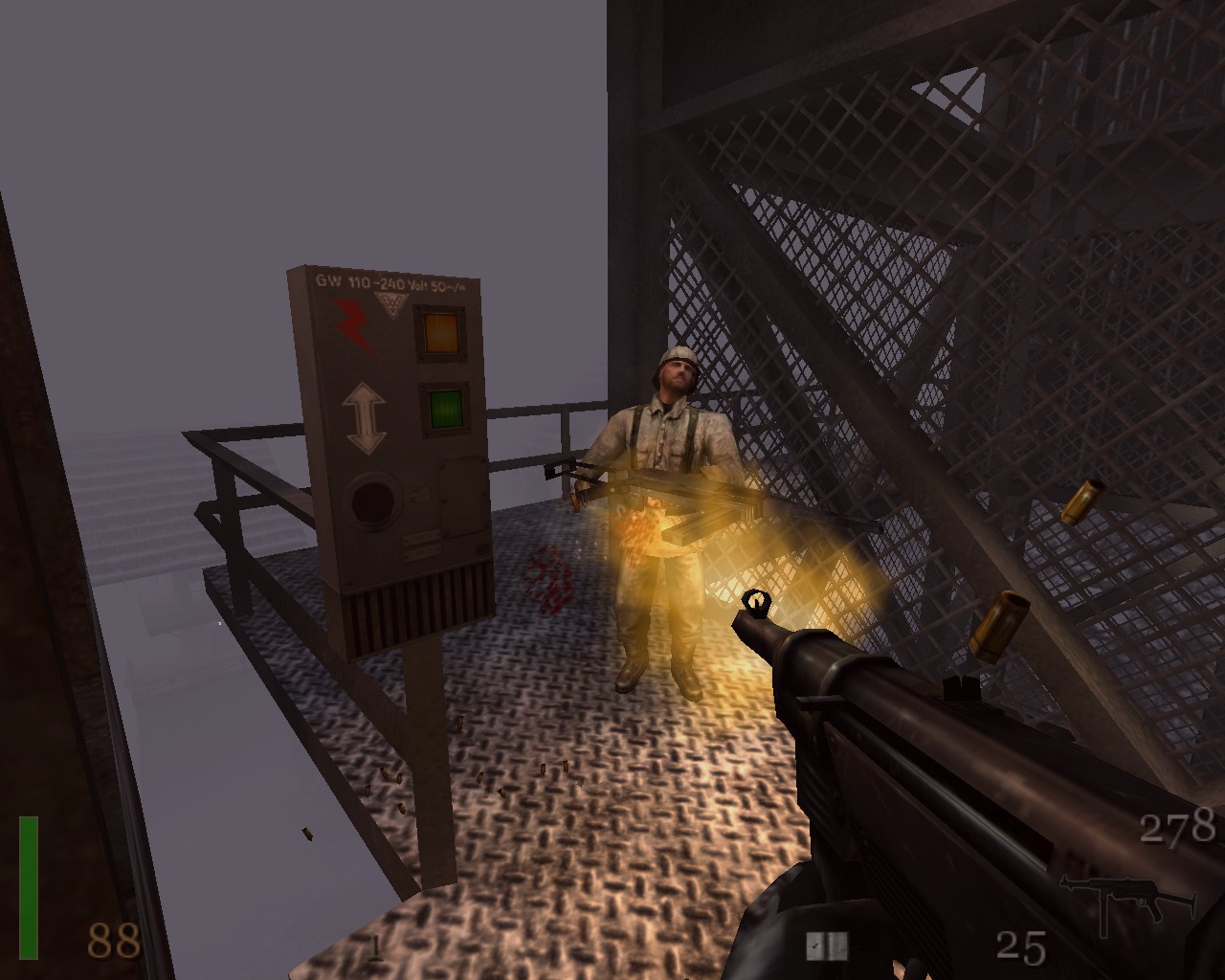
Return to Castle Wolfenstein may be one of the last 3-D shooters before all the sins of modern FPS’s damned the genre to eternal suffrage in Hell. This came from an age where the single player mode of an FPS is actually fun in addition to the multiplayer. You’ll find no recharging health bars, no one-hit-KO-melee-attacks, and no self-absorbed heroics. Instead, the game features things that are, oh I don’t know, actually fun. How does it do this? Easy. 4 steps.

Eat.

Sleep.


Reload.


Repeat.


This is a magic rhythm that 9 times out of 10 makes a good FPS. It’s kind of like what they say about percussion–if the you can chant, “Makin’ money, makin’ money,” then your beat is probably good. The same goes with FPS’s.

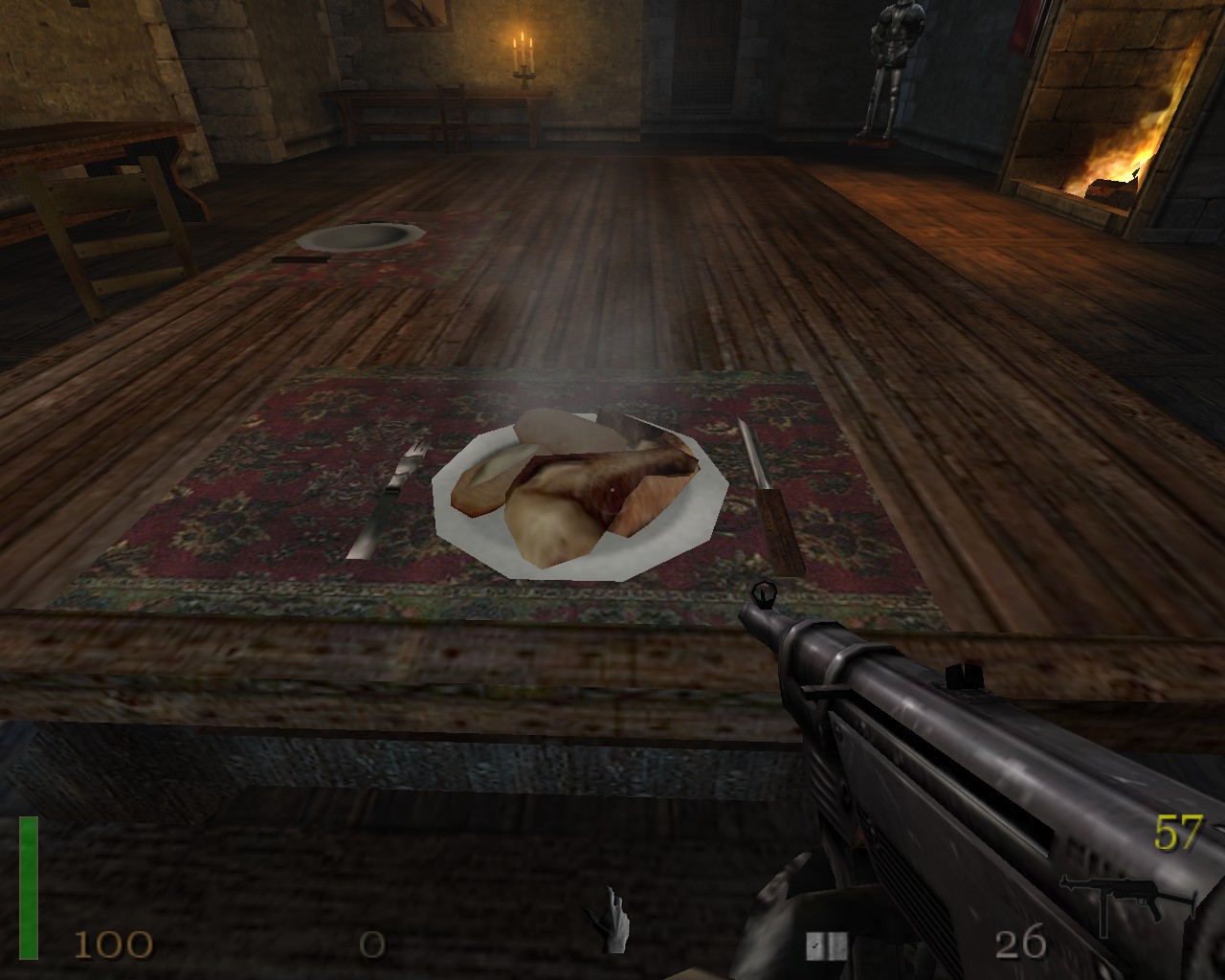
Step 1: Eat. Grab all the powerups you can.

Step 2: Sleep. Give your enemies the eternal rest they deserve.

Step 3: Reload. Put more gun in your gun. Gun is good.

Step 4: Do it again.

Any time you are not doing this in an FPS it is generally a bad time. Running around aimlessly because the level design is confusing? Bad time. Standing around listening to NPCs talk? Bad time. Shooting a man in the face? Awesome.

“But you can soak up more bullets than a Shamwow! In realistic modern-day shooters, death happens in the blink of an eye because it’s a man’s game.”

Cool. You enjoy playing half of your game on the loading screen. I’ll enjoy twice the action.

“Where are the epic cutscenes? Where are are the heroics?”

Well, while you’re watching the game play itself trying to make you feel like a hero, I’ll be out be playing the game actually being a hero.

“It’s unrealistic how quickly you run around and kill dozens of soldiers. You can’t do that in real life.”

That’s what makes it a game. Its departure from reality is part of what makes it fun. If I wanted the experience of what it actually felt like to run around and shoot people I’d go out and do it. …Wait. What did I just say?

“But the graphics are as ugly as sin.”

*ahem* well you see, back in 2002… actually you’re right about that one.

The graphics strike uncanny valley hard; the inevitable fate of every game whose visual design tries to emulate reality. Frankly though, you’ll be moving so fast through the levels that you’ll never care. The music isn’t anything fantastic either. It’s probably best if you mute it and go with “Bad Motherfucker” from Biting Elbows, or “Bang The Drum All Day” from Todd Rundgren or something along those lines. It’ll definitely improve the experience; otherwise, tons of fun.

Don’t be fooled by me putting this in Tier 2–it only goes here because in spite of being a strong title, it is essentially nothing new, putting the priority of other more unique games above this one. However, you might just find me putting this one in again later, mix-tape blaring on a day when I just feel like gunning people down. In the streets. While they run. Wait, what did I just say again?

Steam Link


Gauntlet™ Slayer Edition


Gauntlet… just… “Gauntlet”… actually, I think it’s Gauntlet™? That’s dumb. You’re dumb WB Games/Arrowhead. Wait. WB Games made this? Why the crap is WB Games making Gauntlet?


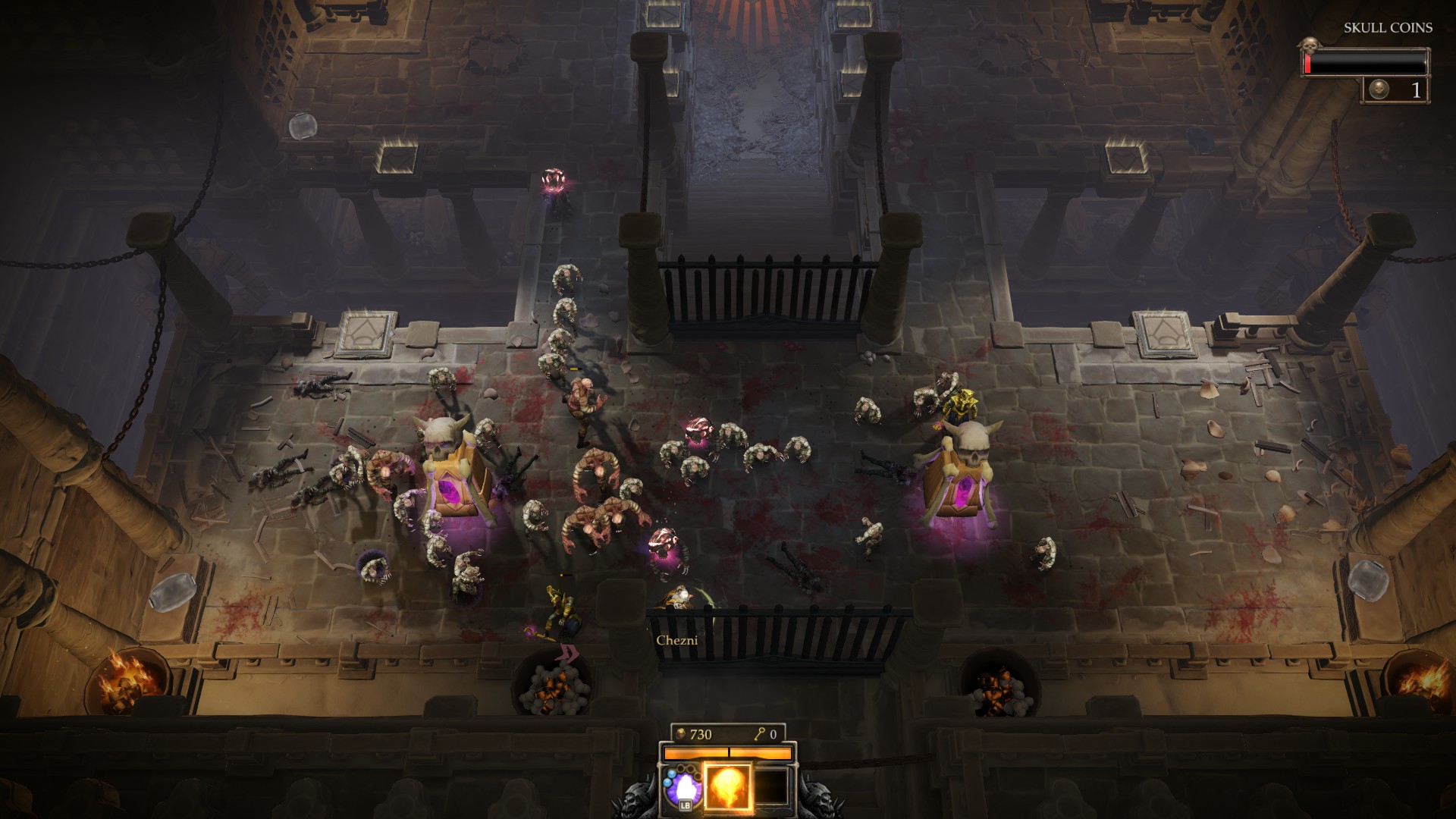
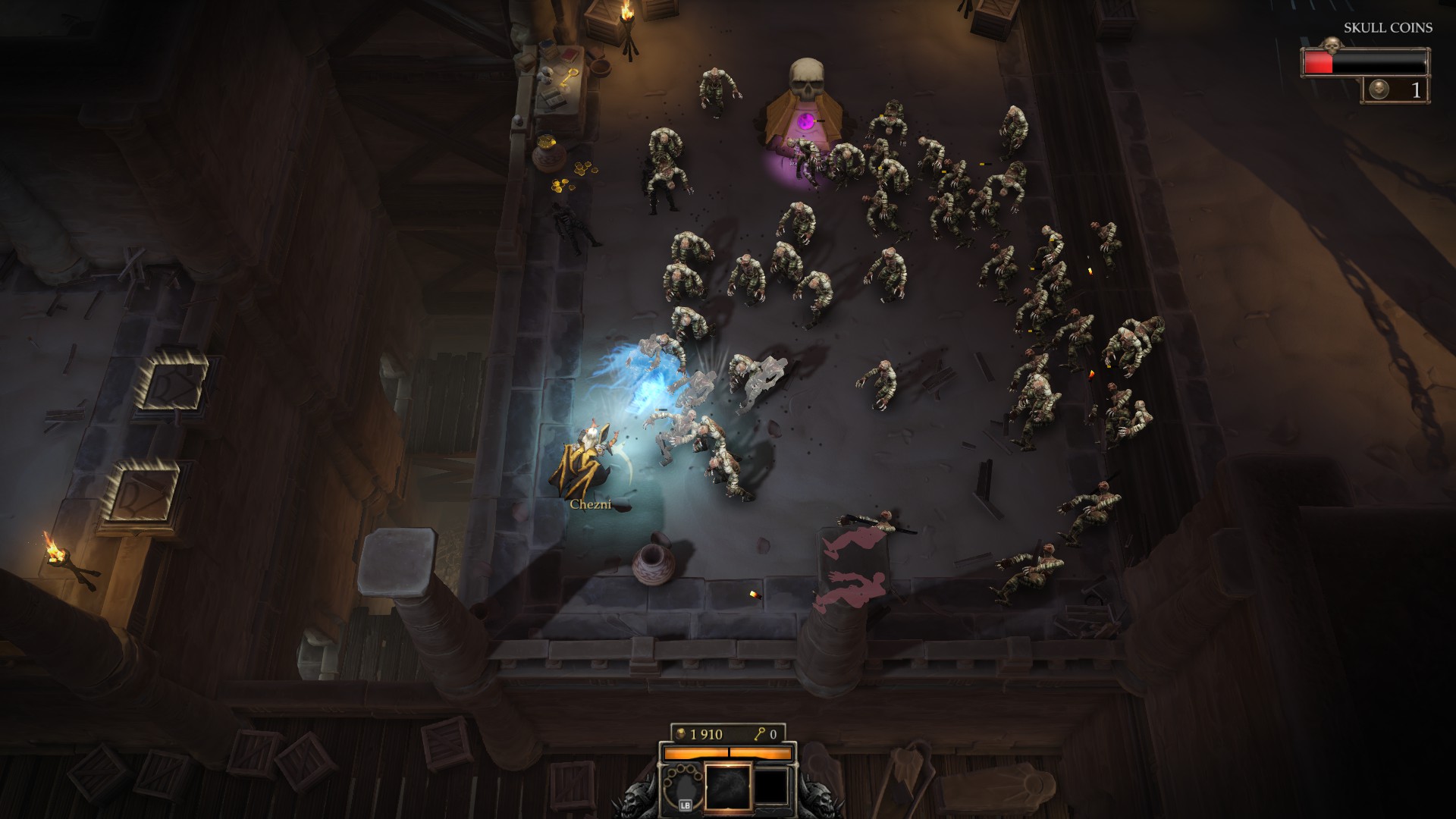
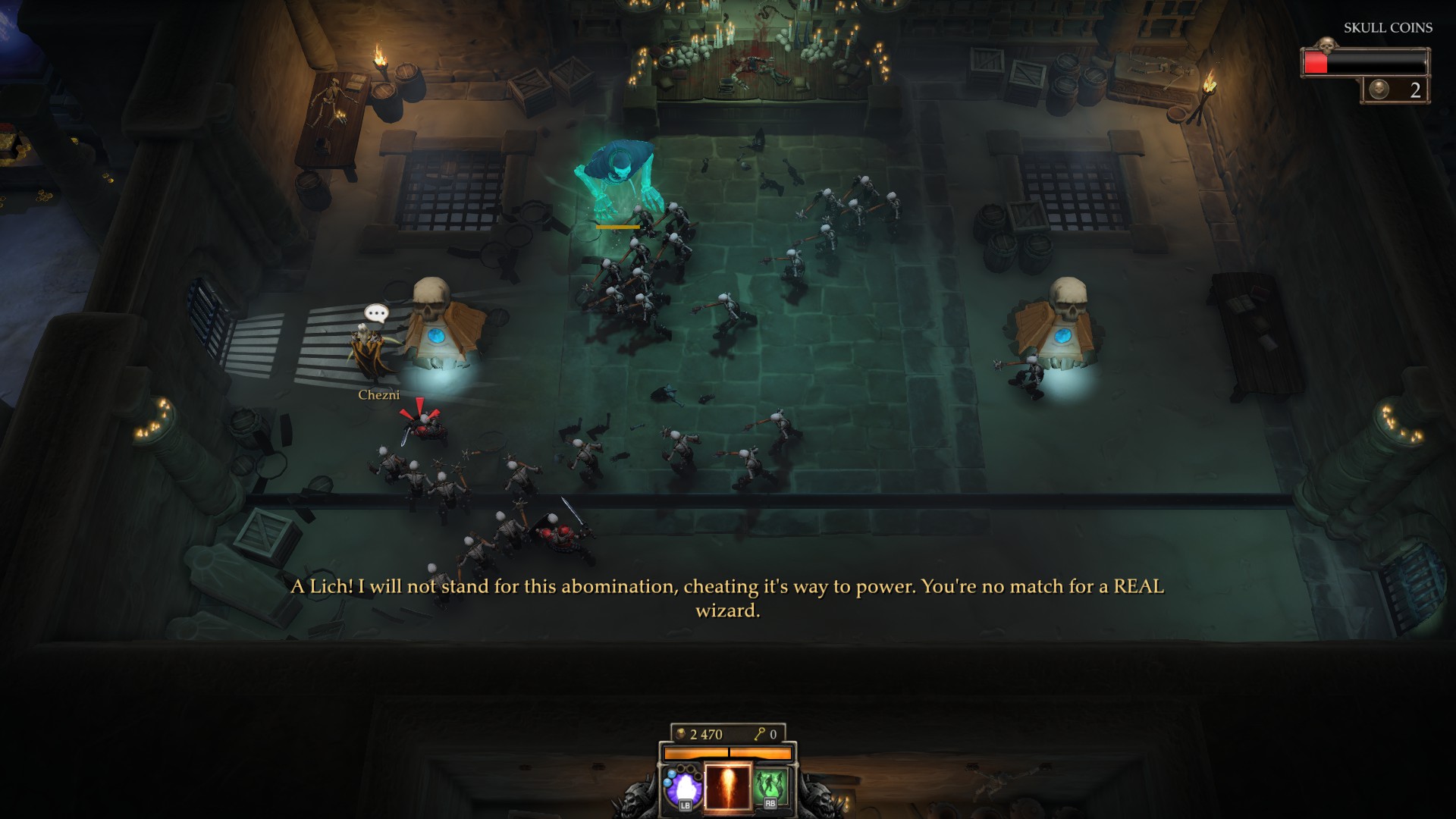
Gauntlet™ is the newest product of the Gauntlet series assembly line, a game series dating back to 1985. The game has always been about two things–slaying hordes and hordes of monsters and grabbing tons of treasure. I guess Gauntlet™ more or less lives up to that standard. You choose one of 4 classes (5 if you’re a sucker and bought the DLC like me) and jump into a series of dungeons with monsters spawners, gold piled to the ceiling and the occasional guest appearance by death.


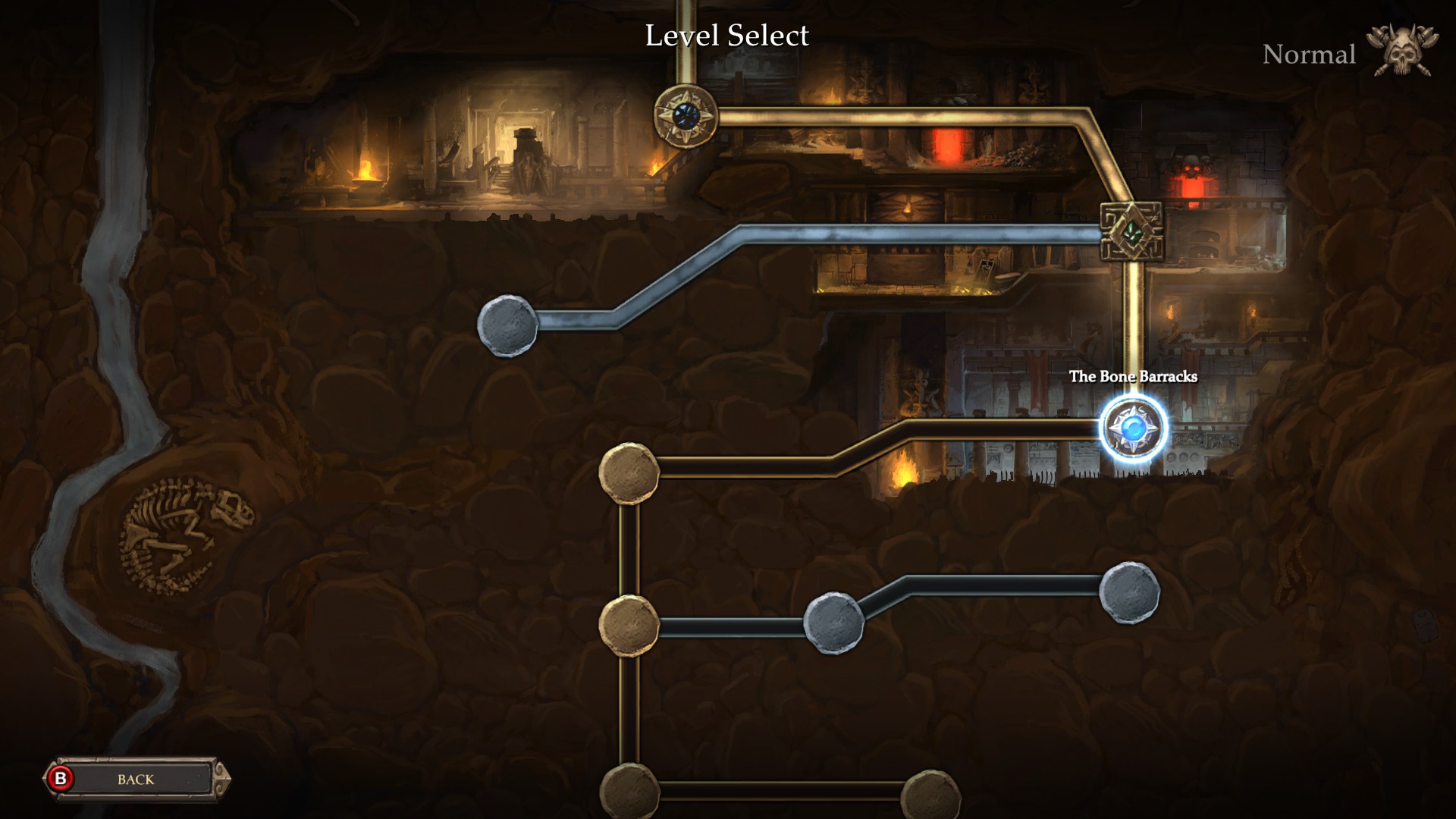
Apparently the game is in its “Slayer Edition” now. I gave a good 2 or 3 hours to the game with 3 other friends back when it came out. We really weren’t that impressed. The Slayer Edition is an enhancement from where I last left it, so it’s good to see that the company in charge of its creation cared enough to improve upon it. The most notable difference to me that I appreciated was the introduction of a map that not only showed you your progression through the campaign but made it easy to jump back to the old levels and even complete a few optional levels.


While this game may be more in lines with the original 1985 Gauntlet, I grew up playing Gauntlet Legends and Gauntlet Dark Legacy. I have to say that I miss so many things that were in those titles not the least of which was the booming announcer narrating simple aspects of the game.


“YOU ARE NOW ENTERING THE VALLEY OF FIRE.”

“THE THUNDER HAMMER!

“BLUE WIZARD NEEDS FOOD BADLY.


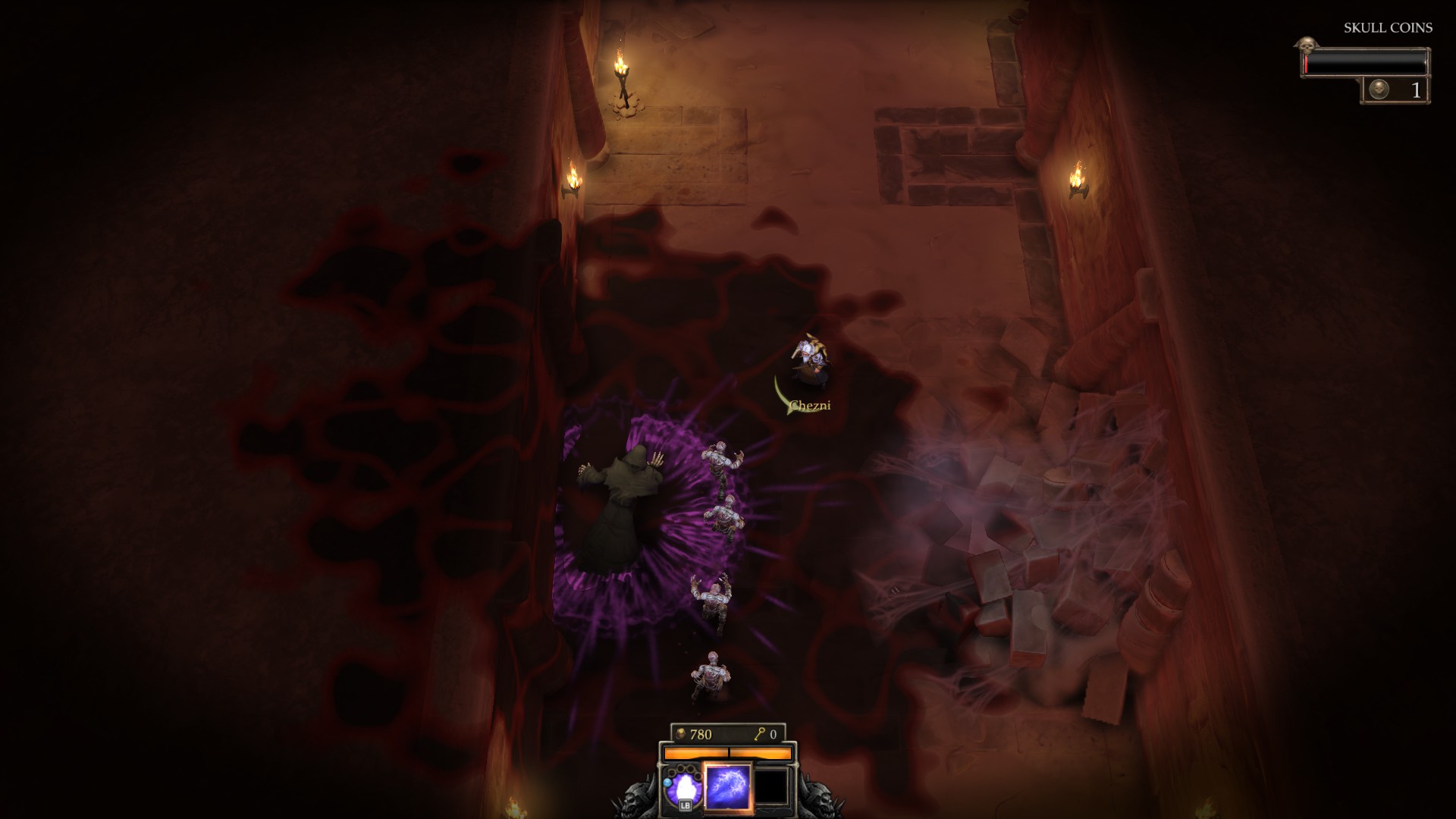
It was corny, but I really liked the way it blew everything you were doing over the top. In line with this, the adventure itself was very Conanic, taking you to locations that were built to feel larger than life. You fought off hordes of goblins on steep peaks, dove into volcanic mountains filled with lava, scaled massive medieval castles and fought bosses that felt like they were 100 times bigger than you were. Gauntlet™ by comparison is sort of drab and doesn’t contain the same energy. My memories of dynamic camera angles while traveling through slimy dungons, metallic armories and broken down villages are now replaced with dull temple-like square rooms in a non-changing top-down view.


Gone too are the slew of wacky treasures you could find from the older series–your only pickups are gold, food and potions (and some dumb crown that I can’t figure out). I mean, I guess there are keys but they’re just part of the dungeon; you can’t stockpile them and you don’t use them on chests like in previous titles. Where’s my phoenix? Or Light Amulet? Or Triple Shot? Rapid Fire? Thunder Hammer? Levitation Boots? Time Stop? Shrink Potion? The list went on and on in Legends/Dark Legacy. Half the fun wasn’t just leveling up and getting more stats, it was raiding the treasure stores and hoarding powerups. Loot was piled to the sky and it was fun to swim through it and pick out the ones you liked best. Speaking of leveling up, that too has been removed from Gauntlet™ replacing the usual feeling of gain from slaying a monster with a feeling of “okay, let’s move on to the next one.”


The game still has very tight controls and smooth gameplay though. As always, I chose the wizard–and I have to say that the Wizard himself is perfectly designed. He has a beautiful balance of simplicity and speed while maintaining distinct strategical elements. Basically, he has 3 runes that he can combine on the fly to create 9 spells. The spells diversify the wizard’s repertoire allowing a smart wizard to have the tool to handle any situation. It’s very well balanced to boot–clever and careful use of all the spells is rewarded much more than trying figure out which one is OP and then spamming it. Before the Slayer Edition, I think that this may have been a Tier 3 game, but with the introduction of an endless mode, a rework of the way skills are purchased and its overall decent design puts in Tier 2. It doesn’t capture what I love about the Gauntlet games I grew up playing, but it’s still a decent play.

Steam Link


Might and Magic X – Legacy

Oh mah goodnyess. What is this.
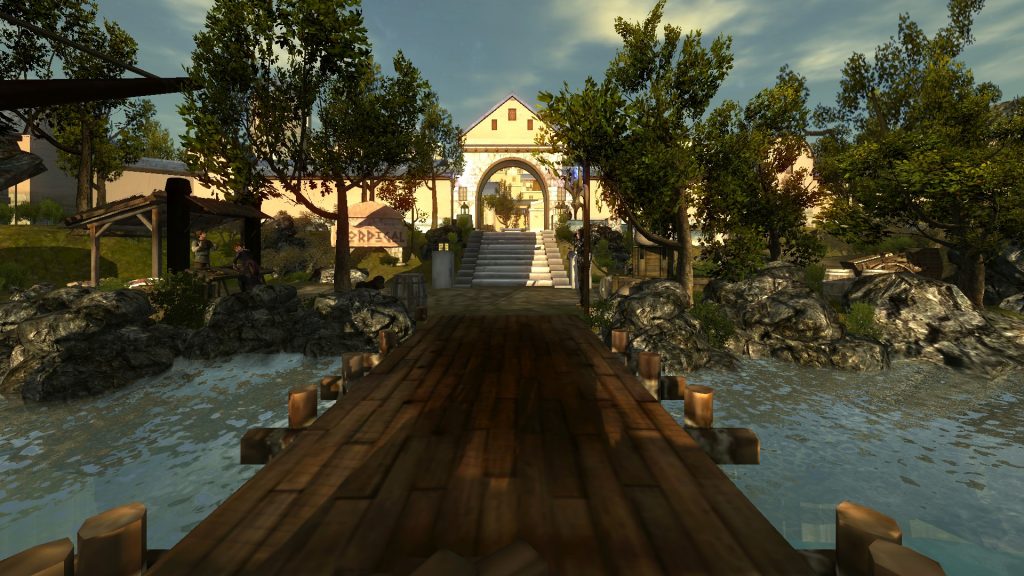
 

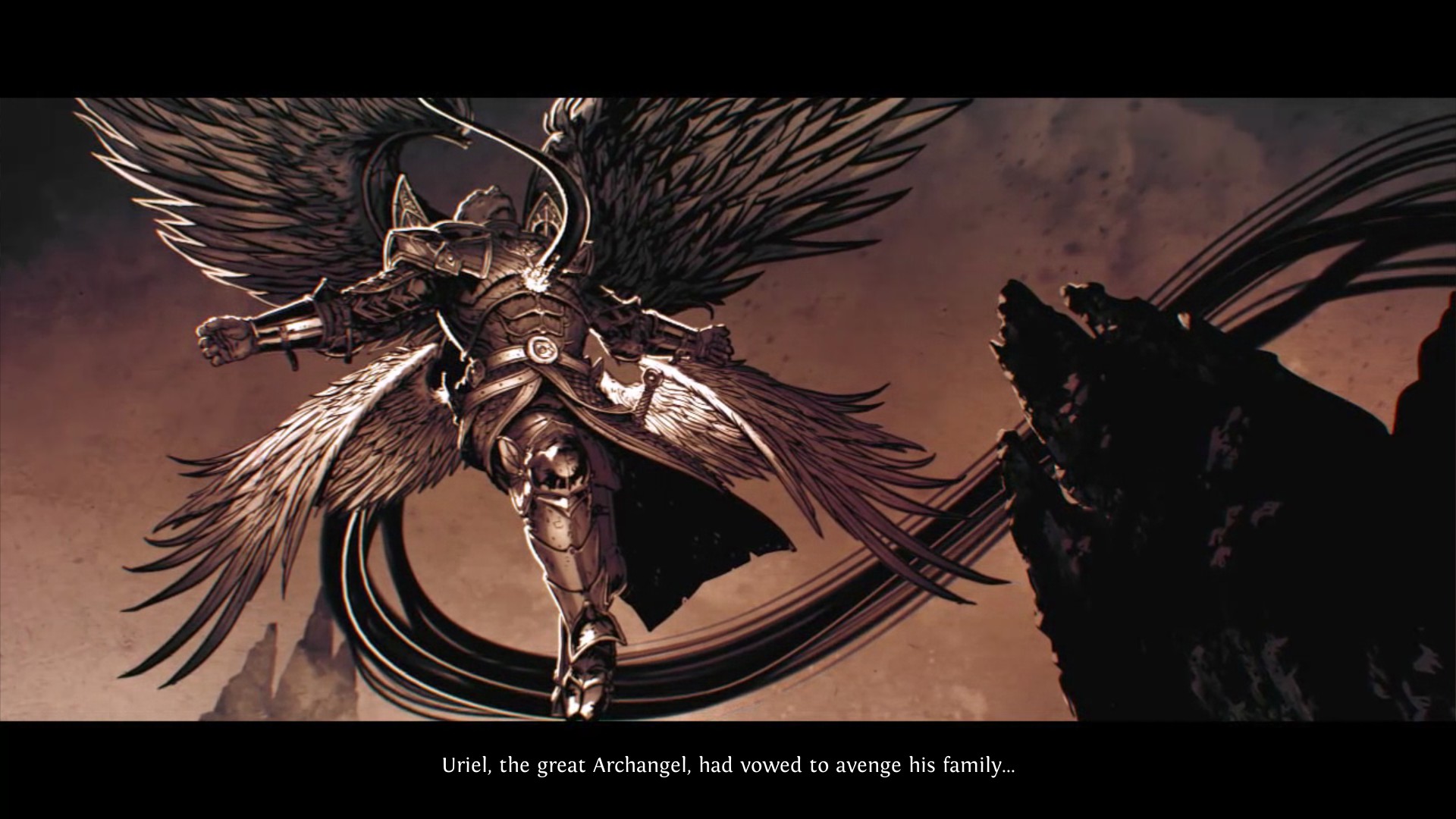
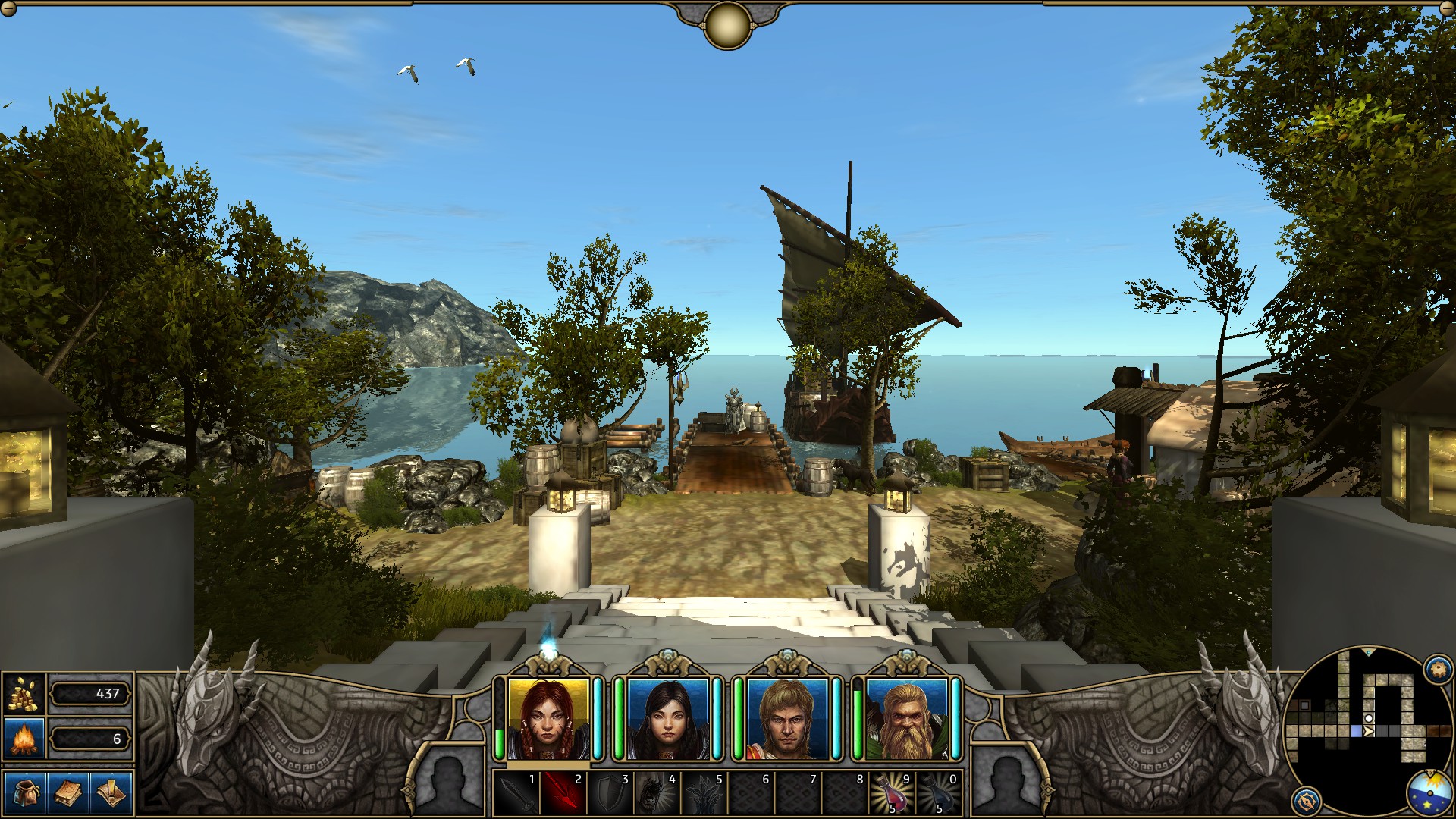
Nostolgia is not a factor for me when I look at the Might & Magic series since I played my first MM only a year ago. Therefore, I would posit that my review of games from the franchise may be less biased than a die-hard fan’s. For the record, I’ve played in its entirety MMVI, which was a whopping 108 hour adventure that while I can’t say was even close to being a perfect game, it was at least a game that I could find certain aspects which held value. MMX on the other hand is a perplexing mess–a failed growth of the franchise that comprises a stagnation of poor choices that pile up on top of each other to create a pointless experience.
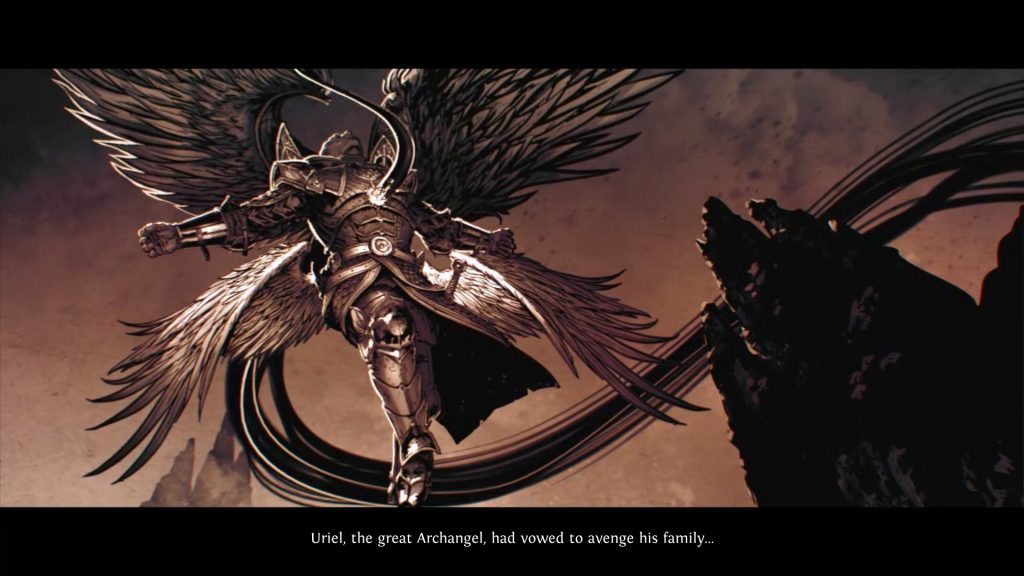


Now, often the opening of a game doesnt’ make total sense to the player. Dark Souls 1 and 3 (and to some extent 2) all actually do this purposefully. Watch any of these game’s openings without playing the game, and you’ll have no idea what you just saw. Watch the opening after playing the entire game (and possibly reading a few pages on a wiki) and it will make perfect sense. The thing is though, is that even without making sense, the openings are fun to watch. You don’t need to know who “Nito, First of the Dead” is to enjoy watching a giant skeleton monster with a scythe walk around spreading corruption. You don’t need to know who “Yhorm the Giant” is when he pops up and Kindles himself because he just looks awesome and the mood of the cinematic makes the scene feel exciting. The opening of MMX makes no sense… but lacks any sort of interest or excitement whatsoever. It’s a confusing malaise of a tired narrator bleating out line after line of dialogue concerning the history of a dozen characters that are all introduced and swept away so quickly that you can’t keep track of them and whatever exploit the narrator describes of them is meaningless. It got to a point where I actually started laughing at how ridiculous the opening was becoming–I kept expecting it to end but the moment they wrapped up the 20 second exploit of one character, the narrator switched gears and started talking about another. I have no idea what mood or plot or setting the developers were trying to create with this kickoff to the game but whatever it was it only created a profound sense of boredom and confusion within me.
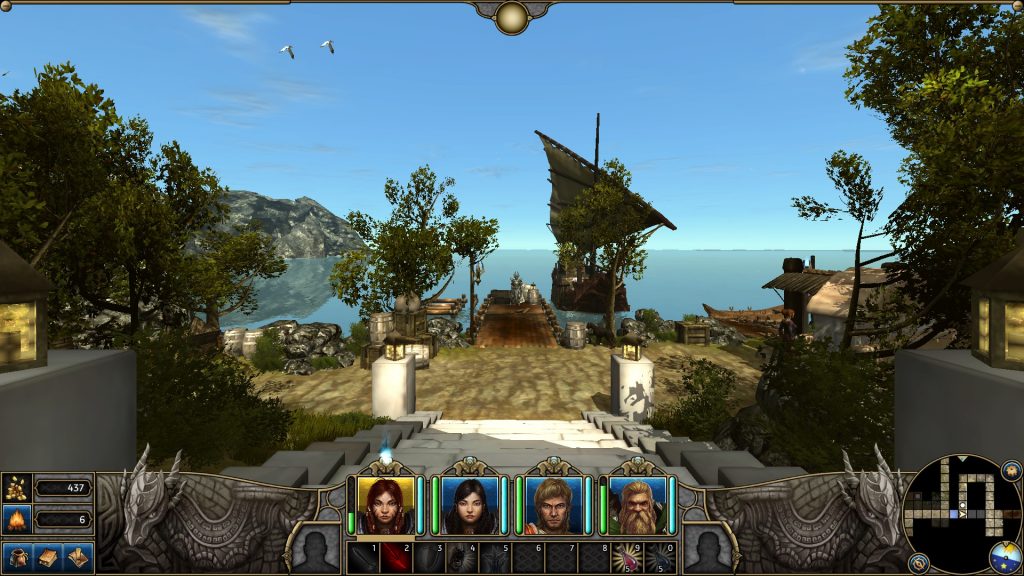


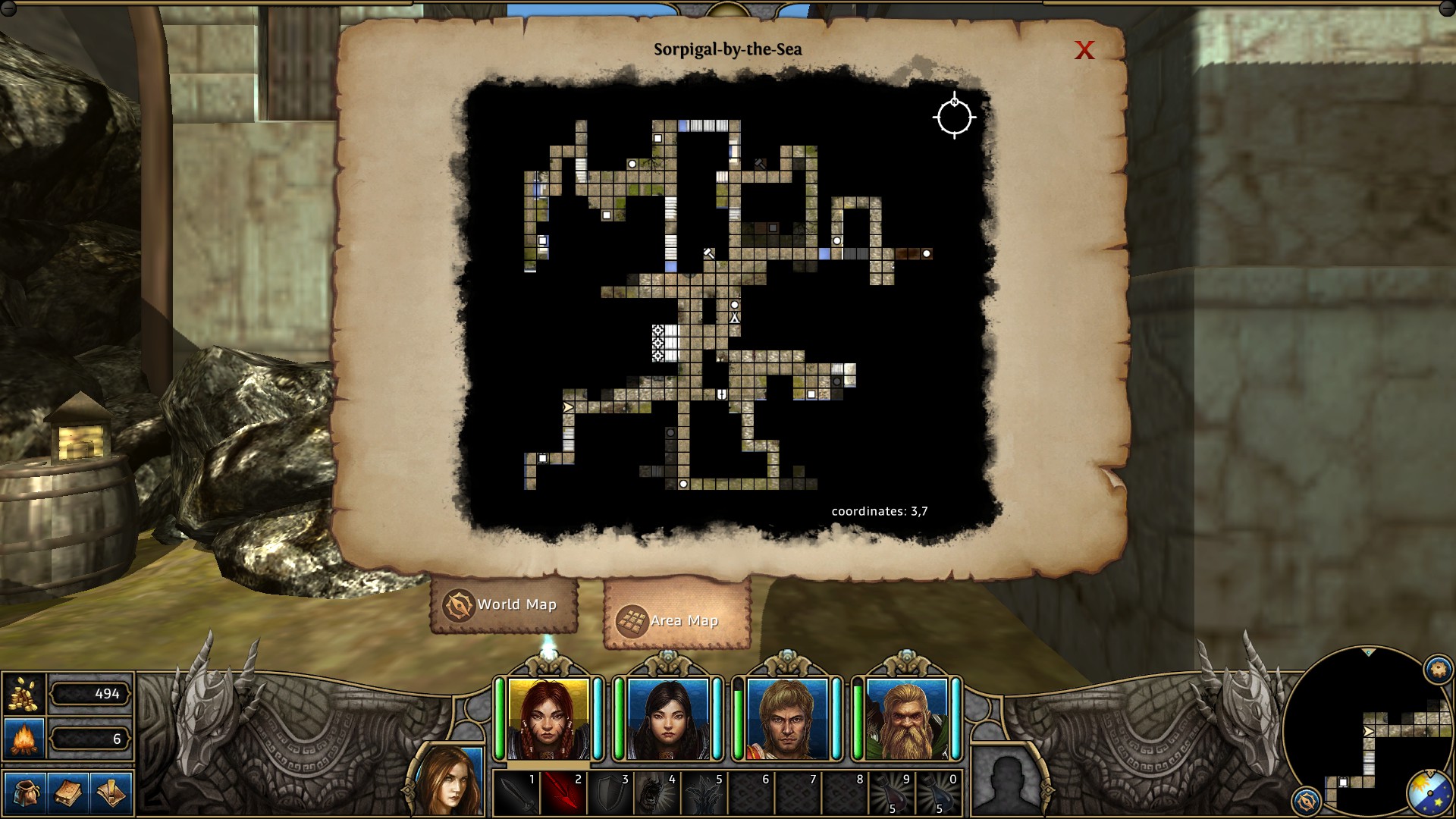
The best part of the game was creating the characters but even that really wasn’t that great. Traditional to the old MM’s, you set up a party of 4 and stat them up for adventure. For a game where you can only use 4 party members total, there are almost too many classes–12. You can only choose 2 voices for each race’s gender as well, which makes the idea of role-playing a party kind of difficult. Honestly though, this is the least of our worries. Where the game goes South is that they seemed to have kept all the bad things from the older games and got rid of all the good. First off, you move on a grid. This was surprising to me, since one of the interesting parts of MMVI was that you in fact moved free-form. This meant that to a certain degree, platforming became a part of the game, which really made the dungeons and terrain feel open. It also allowed for some interesting puzzle solving that forced you to adapt to a 3-D environment in order to find secret levers, switches, etc. It’s not that a party-based 3-D grid-based RPG is a bad idea–far from it. It’s just that as far as I can tell, the MM games moved away from grids in order to create a more diverse and unique game. A step back to it just feels confining now. No longer can you fly, or swim, or jump up on top of buildings–you’re just stuck on your little grid, moving along at a snail’s pace.
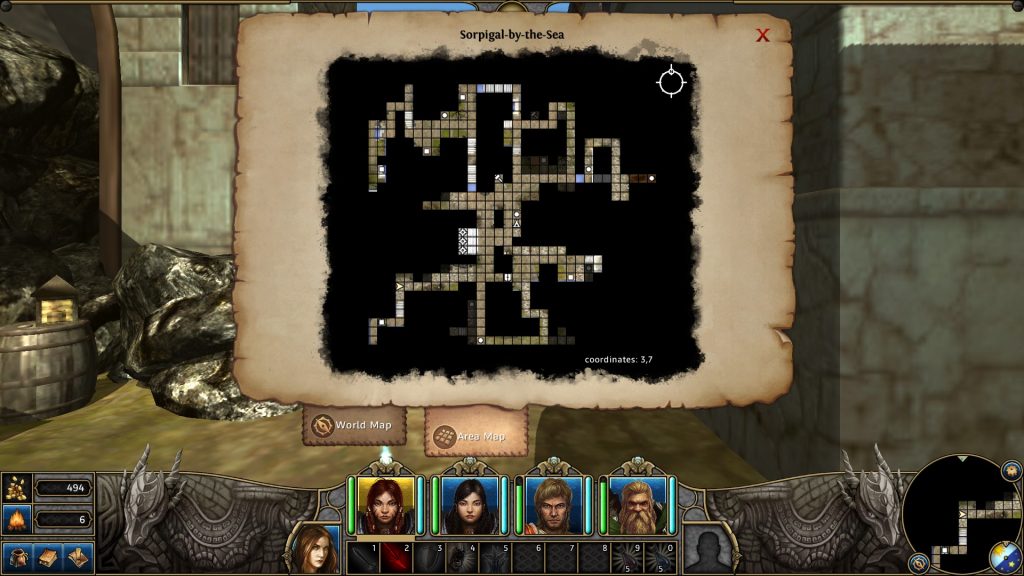


Gone is real-time combat as well. If you didn’t know, in MMVI you had the option of playing the game in a take-turn fashion or fighting in real-time. Typically, this meant that if you were fighting enemies that you knew you could beat easily, you fought them in real-time because it was faster and in some ways a little more fun. If the enemies were strong, you played in take-turn mode so that you could carefully and precisely guide the actions of each of your characters. Back to MMX, you are restricted to take-turn combat only which is just dull. It’s exactly like Grimrock in that the enemies move around in the world on the grid with you, but unlike Grimrock you are forced to freeze in place while they move and vice verse for them.
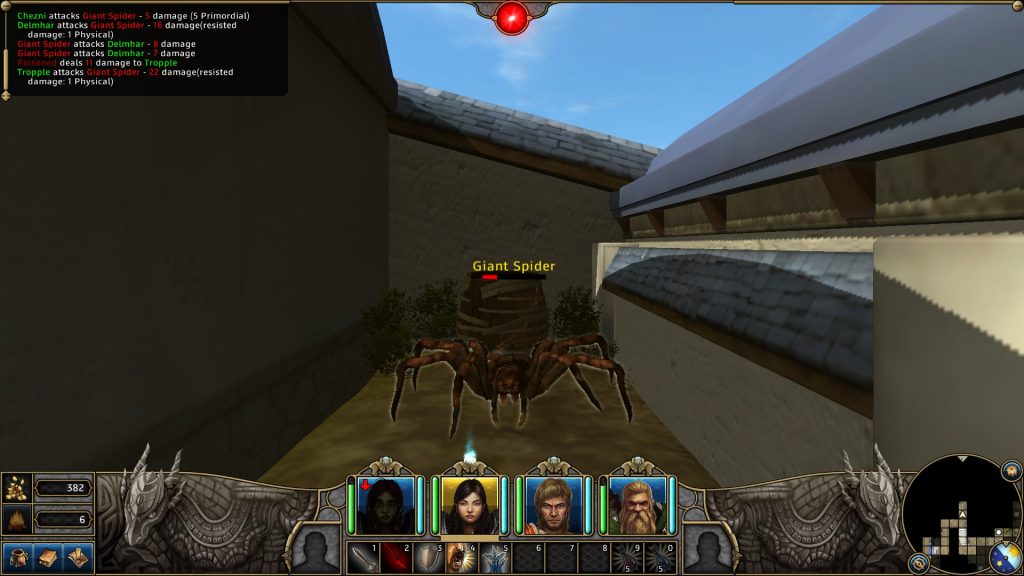


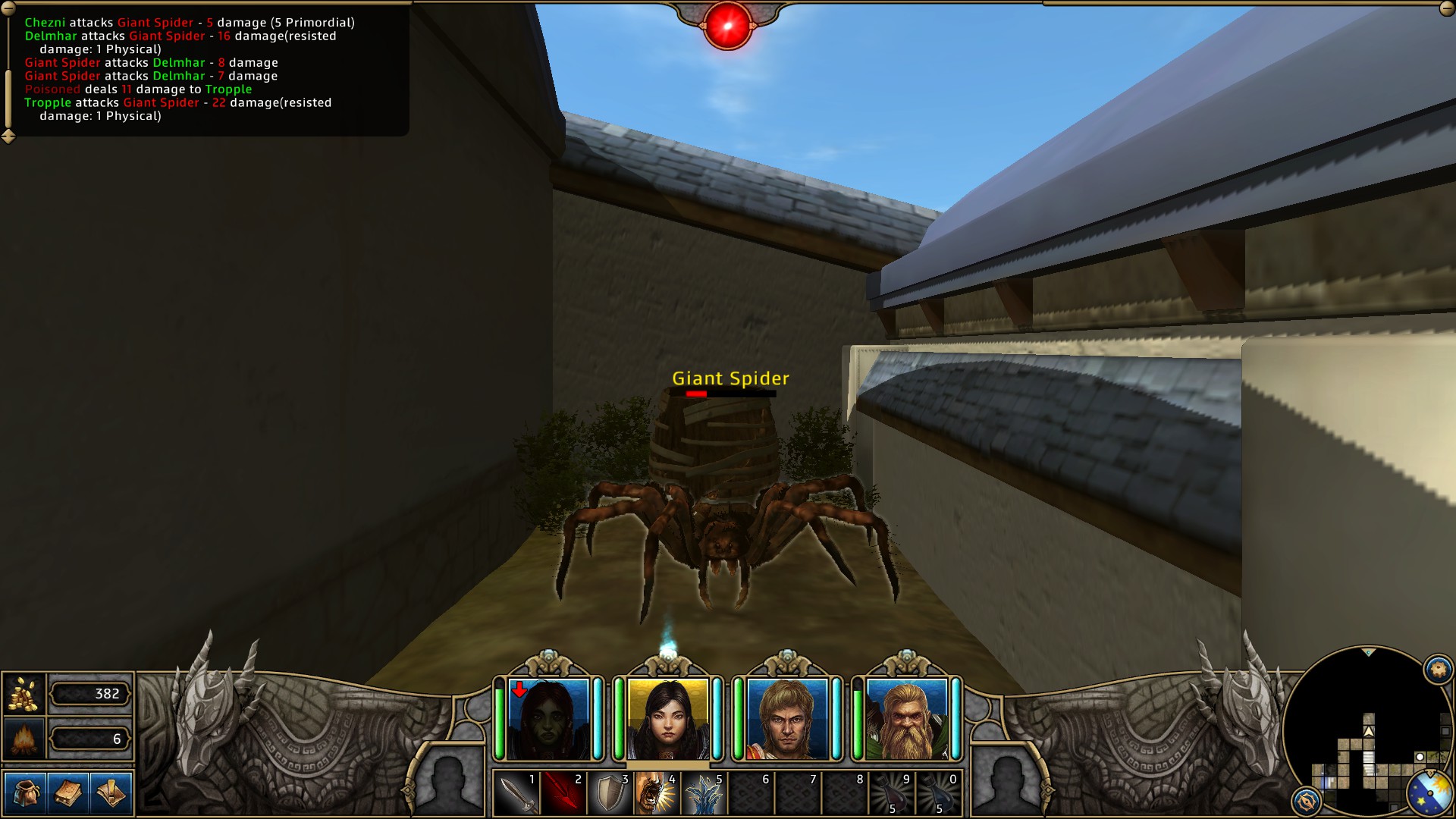
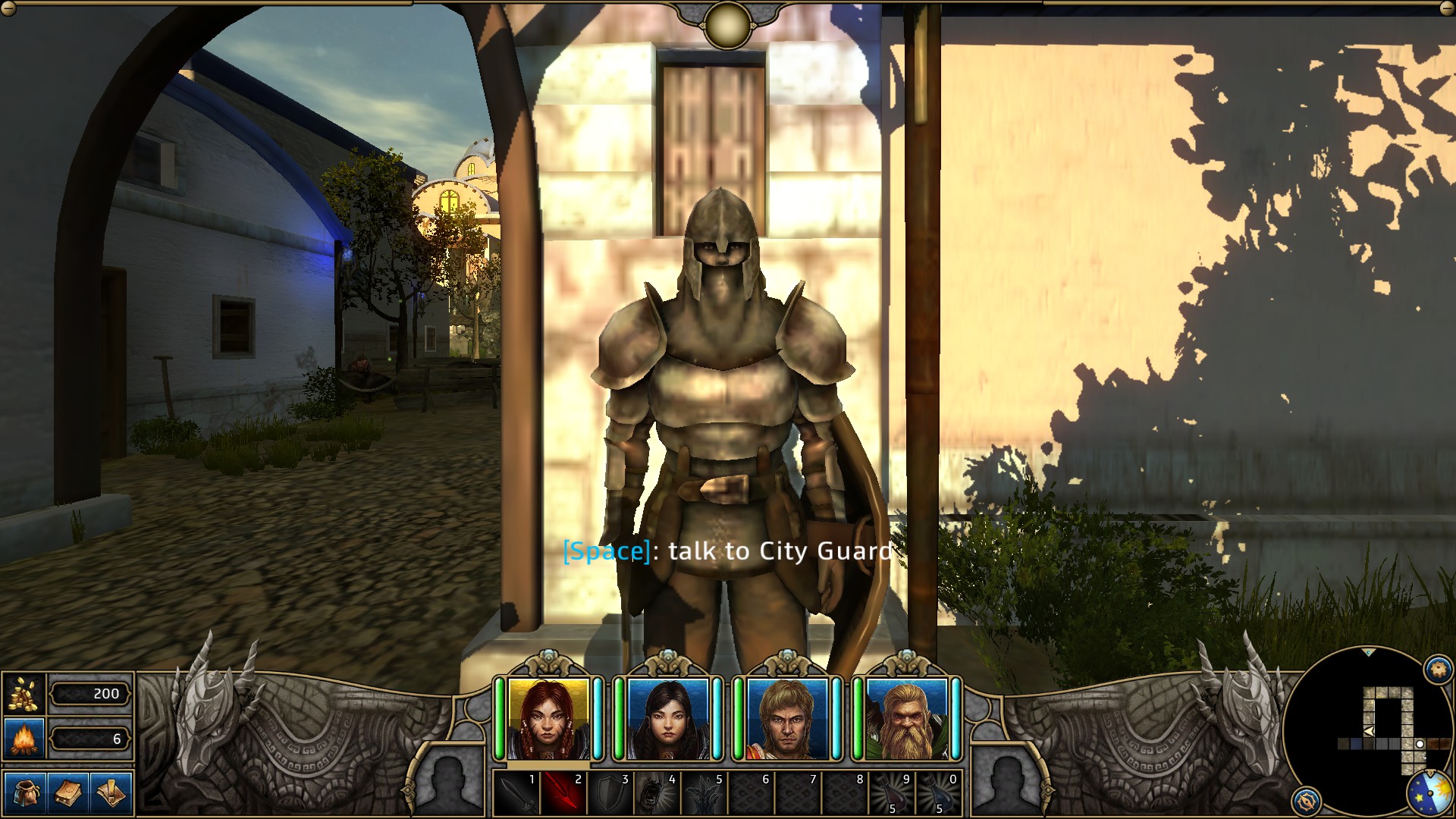
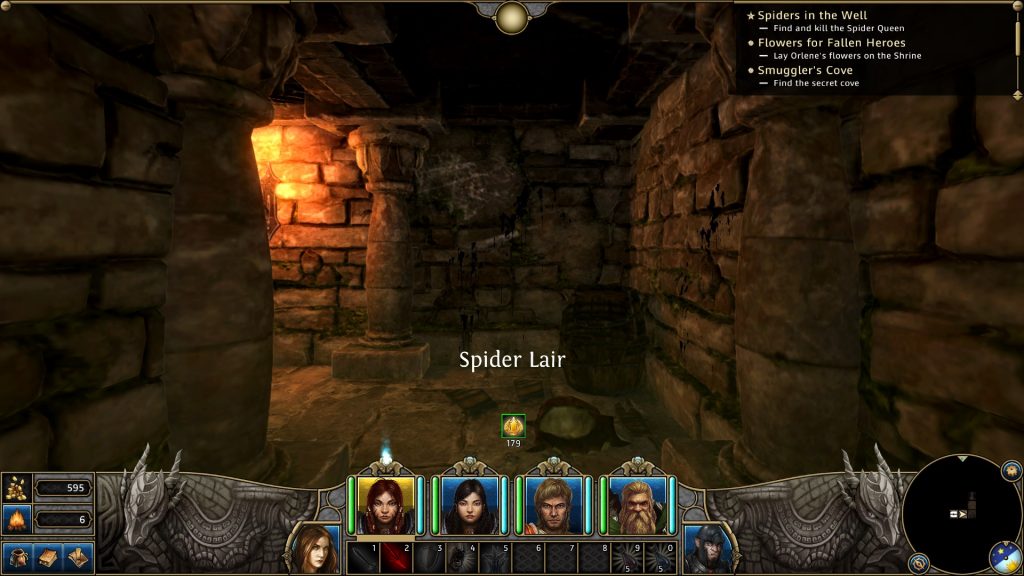
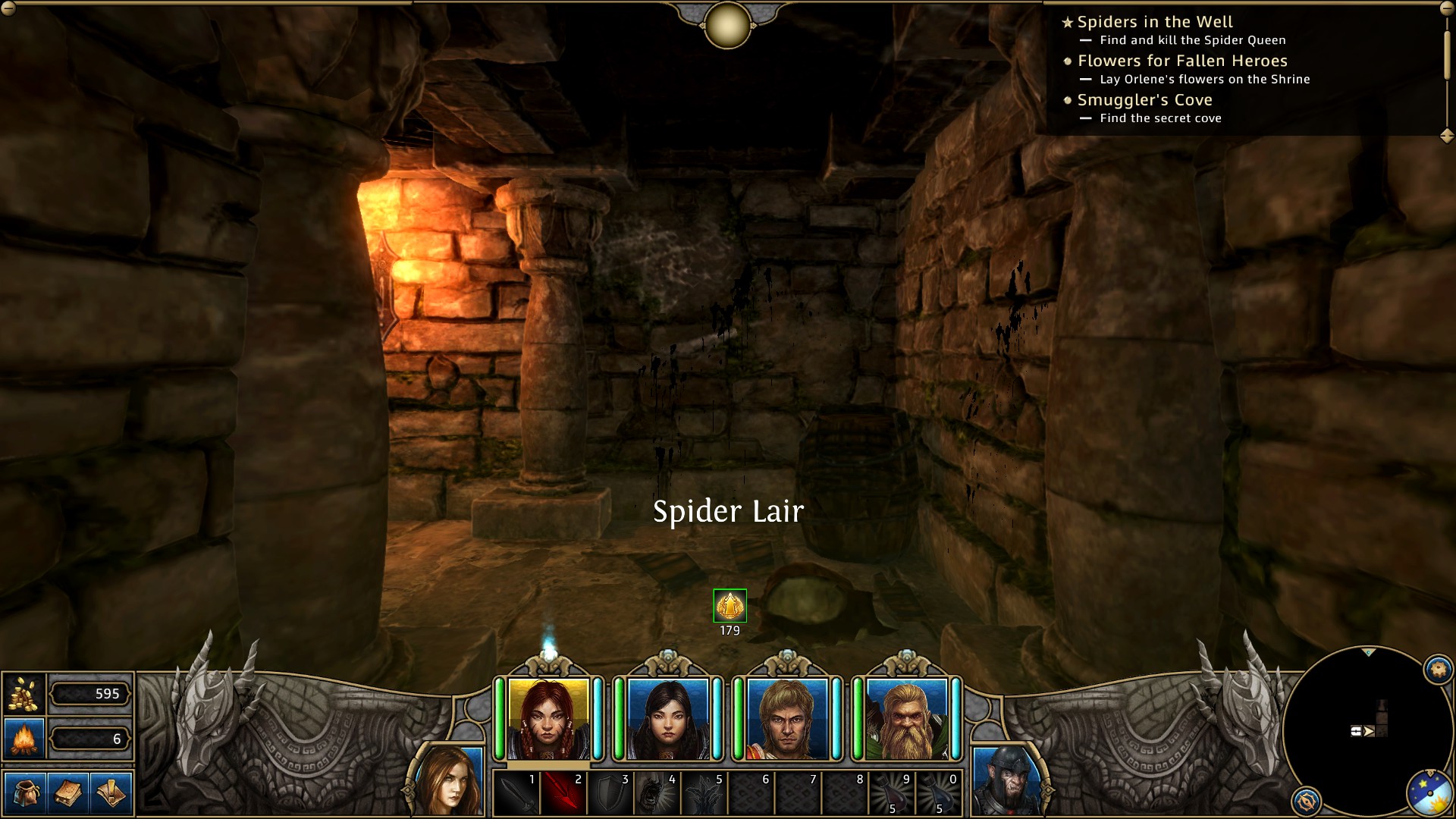
Quests were a big part of MMVI, but oftentimes if you stumbled upon a dungeon early, you could explore it without needing to have received its quest. In contrast, in MMX I was wandering around clueless in first city where I found a well. The well looked suspicious. I tried to click on the well. I tried to move into the well. I even noticed that the mini-map was telling me that there was something interesting in the square with the well. Turns out, I wasn’t allowed to go into the well until I’d talked to the right guard who was all like, “Hey, let’s go kill spiders in the well.” That’s just stupid, coming from a franchise that previously was comfortable with letting adventurers explore to a large degree at their own will.


Part of the fun of MMVI was seeking out teachers to buff up the skills of all your party members, and eventually training your characters’ abilities up to the Master level which got you some really cool spells and abilities. Characters were limited on what skills they could learn by class but as long as you could learn it, you could achieve master level. Back once again to MMX, your characters are still limited by what skills they can learn but they can only achieve master in a few areas. This means that you’re pretty much locked into what you’ll be doing in the game right when you pick your classes. After that, there will be no free-will in skill growth, no exploratory skill combinations, and no sense of great power at the end of the game. Yes, in some ways by the time I got to the end of MMVI it was a bit silly that everyone was a Master in almost all of their useful skills–but I stress almost. For starters, my characters were level 90 dammit, so I felt justified that they had become masters in their crafts but secondly, in spite of being level 90, there were so many skills available in the game, that there were still plenty of abilities that I was only an Expert in and some still that I was just simply trained in with no title. By confining the player’s skill choice right at the beginning of the game before they’ve had a chance to understand what skills are good for their party, what skills are bad, and what skills are even interesting to them, chances are they are going to end up with skills and abilities that they don’t want or that are bad. Essentially, the only way for them to know which classes they should pick, they will either have to have played your game before, or look it up online–neither of which are an acceptable solution to the problem.
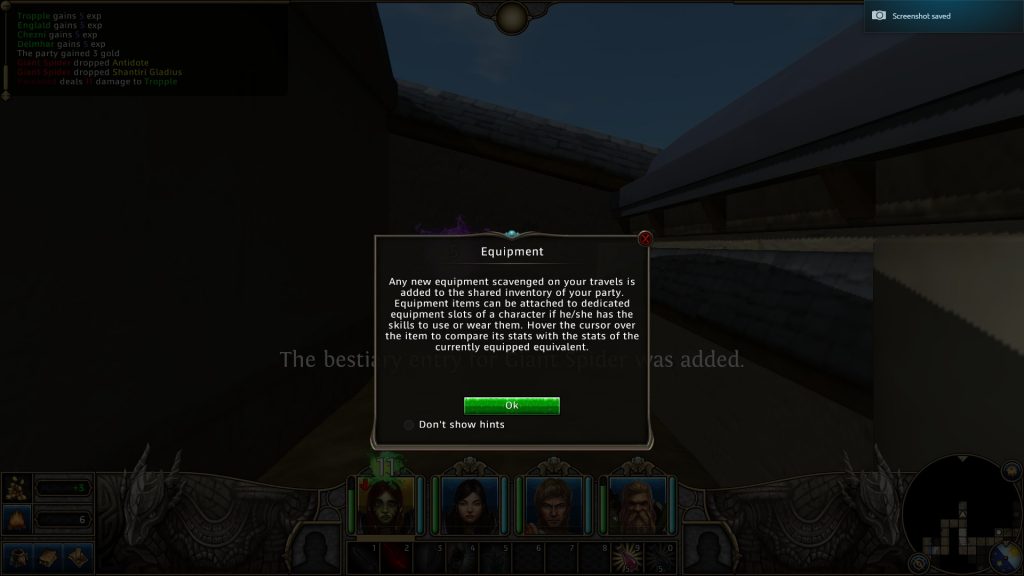


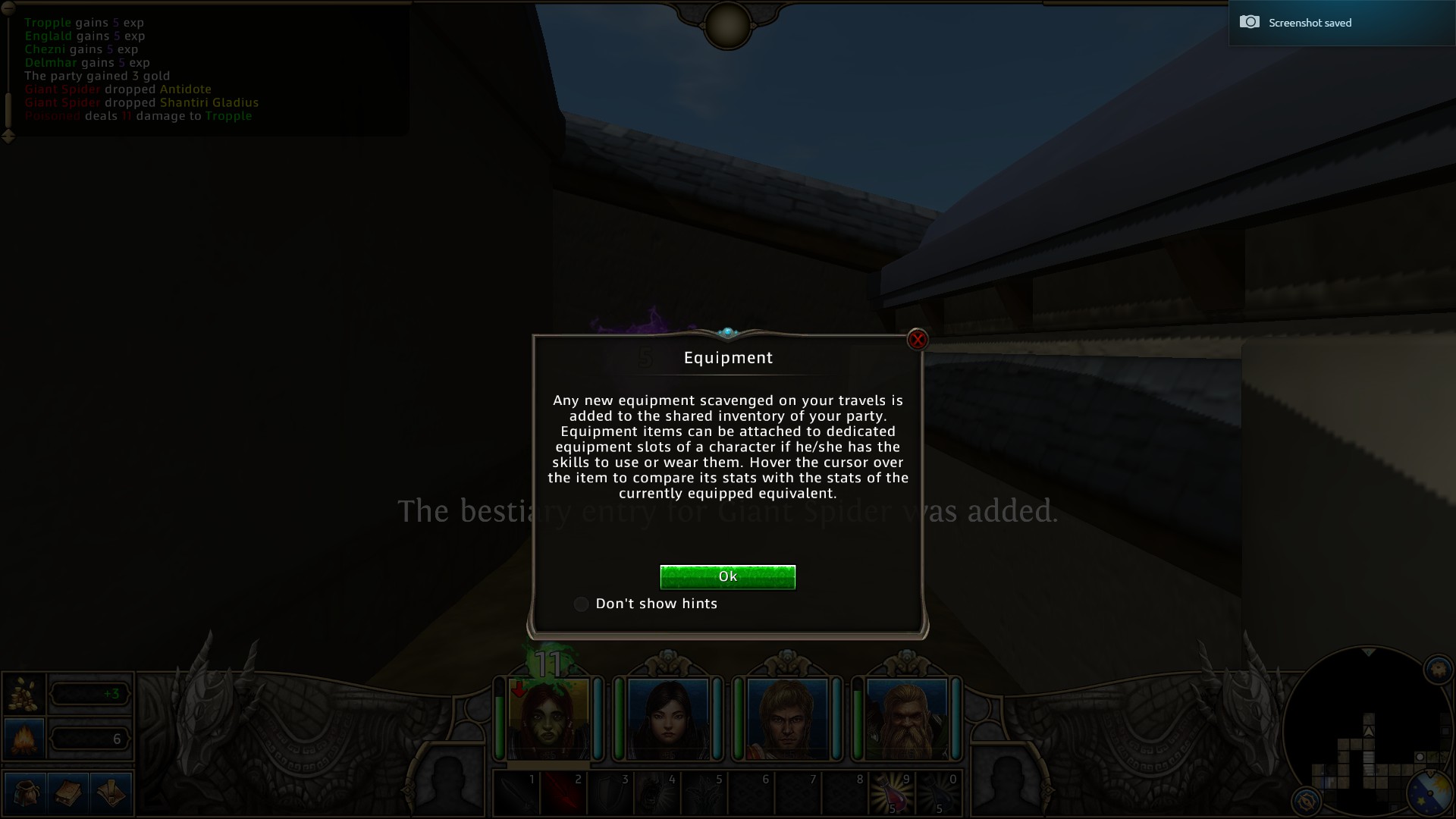
And don’t get me started on the insane number of tutorial pop-up windows that treat you like a moron. I guess it’s my fault for not clicking the “Don’t Show Hints” button earlier, but I kept expecting them to teach me something useful. I guess they thought “rest to regain your HP” was the most useful thing they could tell players.
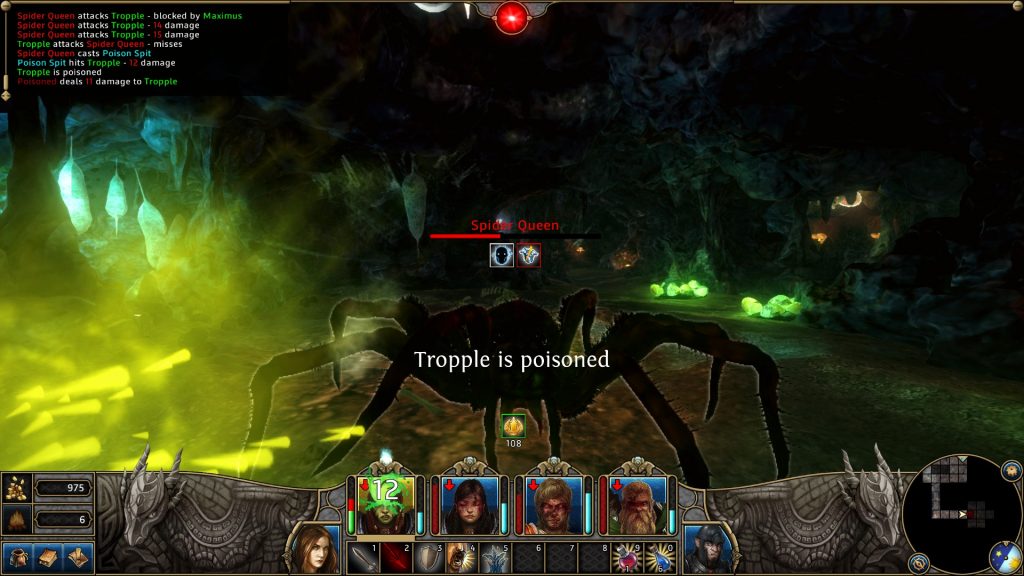


The last roast is on the combat itself. To be fair, MMVI didn’t really have complicated combat. This would actually be one of my main complaints about the game. Sure there were a lot of spells and things to equip and skills to learn, but combat usually consisted of telling fighters to swing their weapons, and loading up the best spell your mages could cast that wouldn’t immediately drain their entire MP pool and then letting it all rip with the same button push for each character (the “s” key). So, I’ll say it again–intricacies of combat were not MMVI’s strong suite. That being said, if you encountered a stronger foe, you always had a few limited forms of counterplay (run away and shoot, run away and shoot) and unless you got teleported to a room without an exit, you could always run away to fight another day. Both of these things are severely limited in MMX. You can no longer run away from an enemy once it has engaged you in melee combat. While I understand maybe imposing some sort of penalty for leaving a melee attacker’s range makes sense thematically and mechanically (i.e. attacks of opportunity in DnD), but completely removing your ability to escape from a more powerful foe says just one thing to the player “Why didn’t you know exactly the strength of the monsters that you were going to encounter in the dungeon beforehand?” I’ll tell you why. Because I’m not freaking psychic you stupid developer. This creates an illusion of difficulty, since you can and will suddenly will die when you encounter a monster that no matter how intelligently you use your skills and healing consumables you have no chance of winning against. The reason it is an illusion is because there is no counterplay or forgiveness for this “mistake” (at which it is more the mistake of the developer for giving you the option to encounter the monster and then slapping you on the wrist for doing so). You simply have to die, hope that you saved recently and move on. Ultimately, the way that movement has been completely removed from combat makes me feel like I belong to the British army from the colonial era and I long so bad for the guerrilla warfare tactics that the Americans are using.
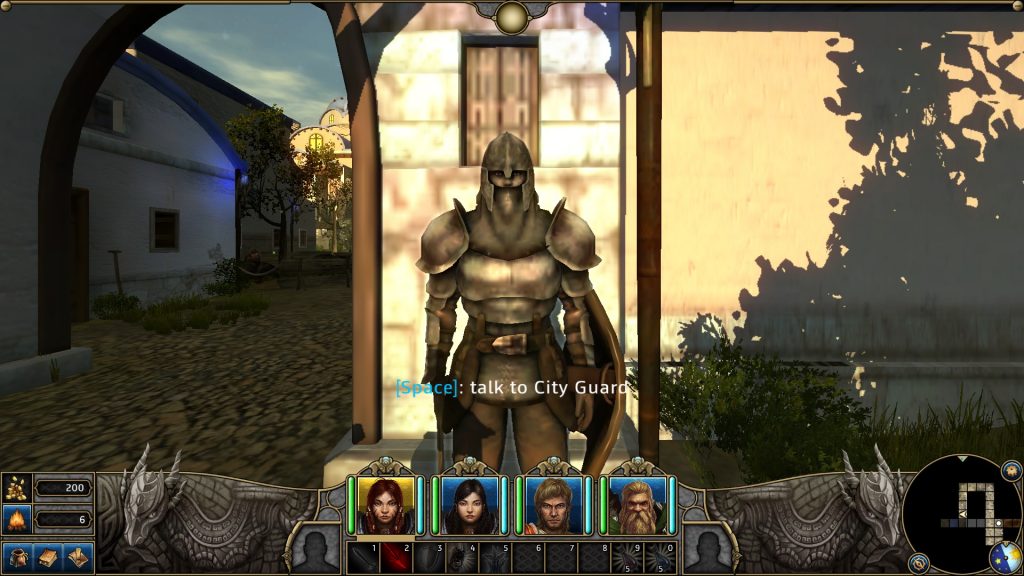


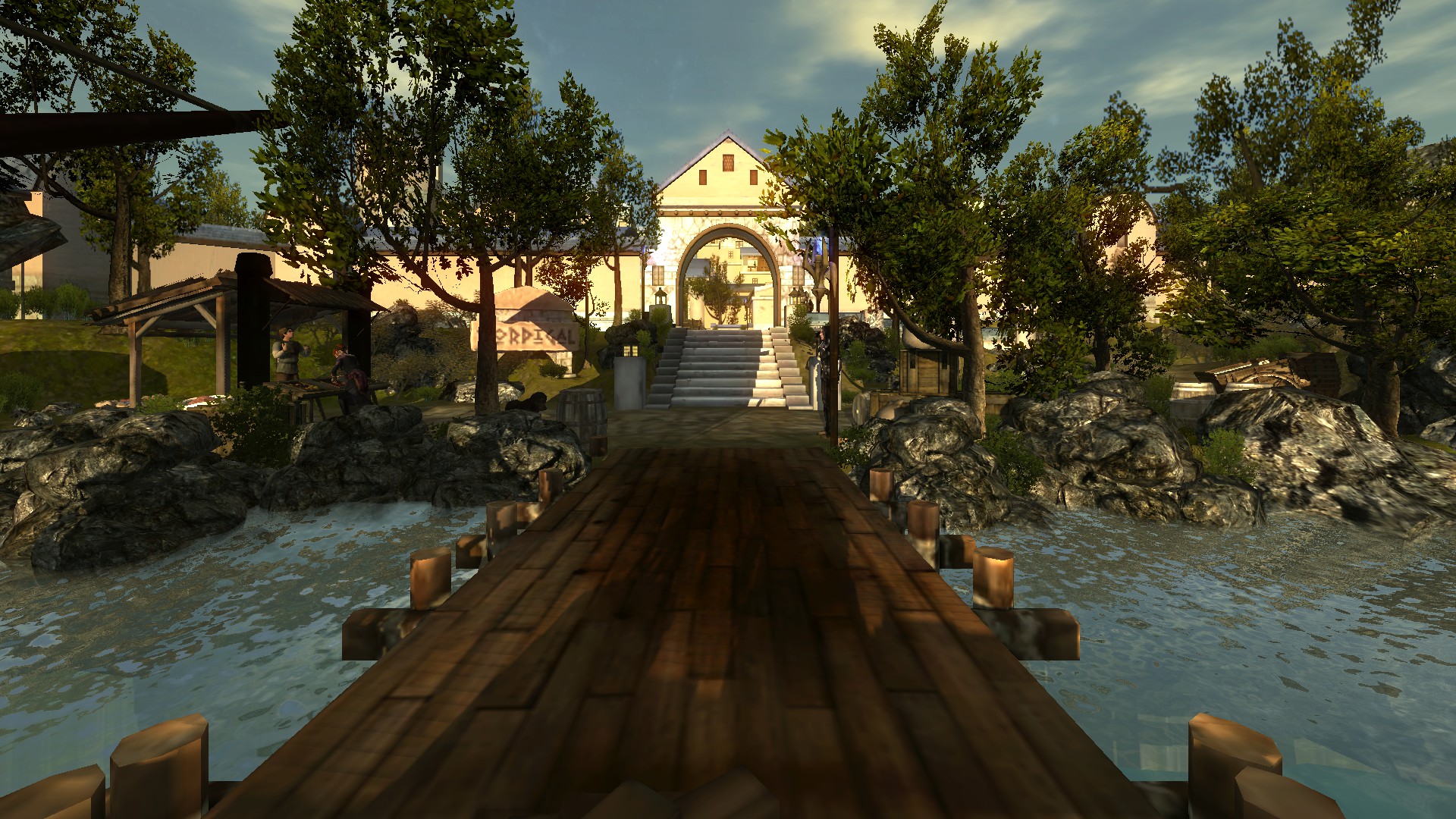
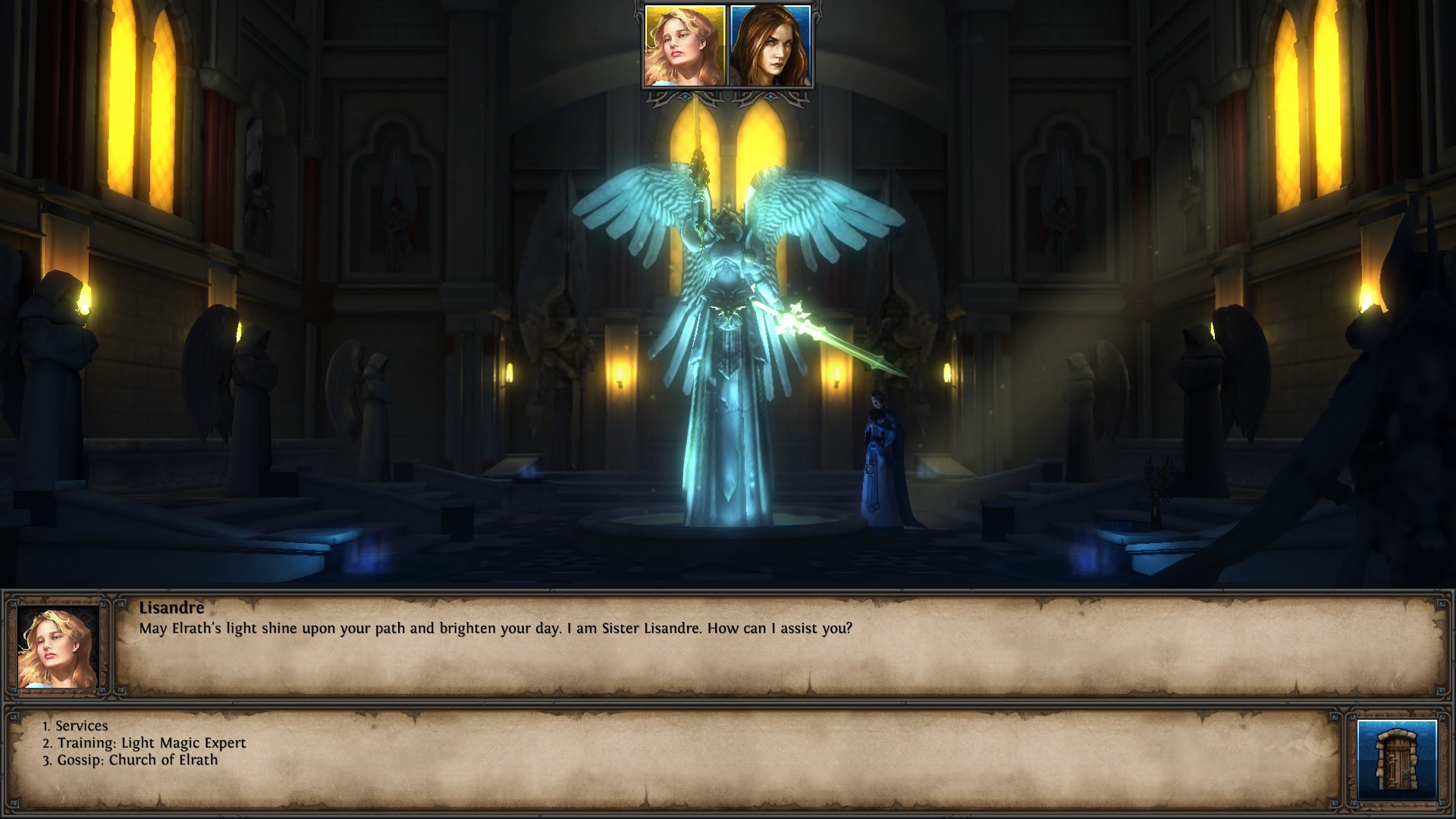
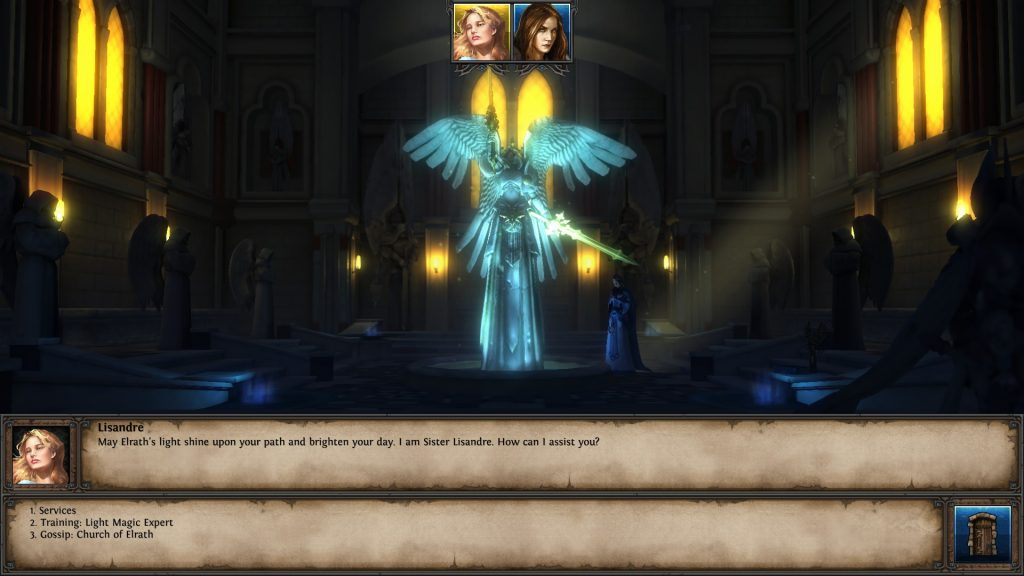
There’s so much more as well. Theses pictures you see may *look* nice, but don’t be fooled. The textures are of a very low resolution. While I’ve never let graphics get in the way of enjoying a good game, well, this isn’t a good game, and so when I can barely read a town sign because the words on it are all blurry I tend to be a bit cross. I mean, this game came out in 2014–these graphics are practically a generation behind where they should be. I wouldn’t be so hard on this point if the game didn’t A. Come from Ubisoft, a AAA company that is fully capable of better. B. The play-testing time saved by dumbing the game down to a grid should have freed up internal resources in the game company to make the other parts of the game better. C. Legend of Grimrock, a game made by a FOUR man team from FINLAND made a game that was better graphically (and mechanically for that matter). How is that even possible? Music is dull. NPCs are dull. The world is dull. You’re railroaded the moment you start the game by being here on some dumb quest for your master, but in spite of this the only thing you can do at  the beginning of the game is wander around, trapped in a dull city forced to take a slew of pointless side-quests simply so you can kill something in an attempt to assuage the tirade of boredom from not being allowed to explore the world you find yourself in. MMX is simply a time-wasting Tier 3 sesspool that Ubisoft crapped out in an attempt to make money off the MM crowd, while completely missing the point and soul of the original franchise, which is actually a pity.

Steam Link
 

Moon Hunters

Hey, I backed this on Kickstarter!  I don’t regret doing so.  It’s an interesting game based around multiple playthroughs, though it didn’t really click for me.  For one, the combat mechanics seem a little unbalanced, as ranged attacks have serious advantages – to the point that I barely got hit my second time through.  My other issue is that the maps are fairly empty and are boring to fully explore.  The worldbuilding is intriguing, but since you’re asked to replay the game multiple times to discover more of the game – you end up starting from nothing every 45 minutes.  If the world was smaller with the same amount of content, I’d feel compelled to continue playing.  As it is, 45 minutes is too much time to spend each run given the content that is there – though it avoids Tier Three because it isn’t too long.  With some free time, I might try it again sometime, but for now it goes to Tier Two.

Legend of Grimrock 2: Grimrockier (Completed)

I might be cheating a bit here.  I’ve played through and beaten Legend of Grimrock 2 long ago.  Well, at least a year and a half.  But writing about it now gives me an excuse to write my first actual review, gush a bit about one of my favorite games, and talk about what makes a good sequel.  And if I haven’t gotten you to listen to what I believe to be one of the best theme songs of all time, well…get to it.  And watch the prologue, while you’re at it.

As for the specifics on the game: It’s a puzzle/grid fighter/exploration game where you are shipwrecked on and must explore an island ruled over by the mysterious Island Master (definitely no D&D overtones there!).  There are 12 distinct ground-level areas, almost all of which have at least one or two floors of dungeon.  All told, there are 34 (well, 33 plus a secret) map sections you will encounter on your quest to solve the mystery of the island.  You travel the island in a party of four, selected from 8 classes and 5 races that allow for such combinations as rat farmer.  Being a rat farmer, by the way, would mean that you level up by eating – and if you eat cheese enough (because you are a rat), you gain stats.
Your only real objective is to solve the mystery of the island, which you think may have something to do with the glowing rocks (no, not those glowing rocks – the other ones) you’ve been picking up.  While finding all the glowing rocks might seem like just a giant fetch quest, the glowing rocks are more incidental to your exploration of the island, and you don’t actually need all of them to finish the game.  Communicating your goals is mostly done through gameplay and the expectation that you are here to play a game – plus a note or two from the mysterious Island Master.  And some talking heads.

Before I get into what I liked, I should probably start with the things I didn’t like – and there’s really only one complaint.  Some of the puzzles are just too difficult.  Thankfully, there’s a website that will prove quite helpful if you have this problem.  This doesn’t knock it from being a perfect game in my book for two reasons: insanely difficult puzzles are part of the charm of puzzle games evocative of the ’90s, and, when you do solve them on your own, you feel like a genius.

A Perfect Sequel

Legend of Grimrock 2 is both a perfect game and a perfect sequel.  Let’s start with what makes it a perfect sequel.  Legend of Grimrock (the first one) was a ten level dungeon crawl.  Grimrock 2 expands on this by making the game about three times as large and adding several new environments.  Between the fantastic art and level design, each area feels new and unique enough that you never get bored – and every inch is packed with secrets, monsters, and items.  It’s this consistently high content density that makes it a good sequel.  Going bigger can often lead to the game feeling emptier – if Portal 2 had any failings, it would be this – but Legend of Grimrock 2 avoids this entirely.

Another problem with sequels is making a second game that’s just more of the first.  Or possibly several games.  While that can be acceptable (or at least tolerated) in a multi-title story, a mechanics-driven game needs a compelling reason to be more than just DLC.  And Legend of Grimrock 2 delivers here as well.  Between vastly improved AI (the first Grimrock had an issue with sidestepping to avoid damage) and a remarkably improved engine that allowed for interconnected maps and external environments, Grimrock 2 took everything Grimrock 1 did, fixed the problems, and made everything else better.  This is especially impressive when you look at how well and tightly-crafted Grimrock 1 felt.

Finally, though a sequel needs to feel different than the first, it also needs to feel like it is part of the same story or world.  While Grimrock 1 was a claustrophobic and grim dungeon crawl, Grimrock 2 is a vast island of high mystery.  But even so, there are times when you are crawling around in catacombs or pyramids in Grimrock 2 that feel unmistakably like Grimrock (even though the actual Mount Grimrock is nowhere to be seen).  There’s a distinct tone shift from the first game, but it keeps enough of it around to still feel like the game I fell in love with – and somehow makes it even better.

A Perfect Game

There aren’t any tutorials in Grimrock 2.  From the first moment, you just do what makes sense realistically and within the confines of the game world rules as you learn them.  There are some signs that give you hints, a few scrolls that teach you how to cast magic spells, and recipes that teach you how to make potions – but all these are incidental.  The primary method of interacting with the game is just WASDQE and the left and right mouse buttons.  When something happens, it’s clear why it happened and what caused it.  Overburdened characters have a snail in their portraits and a darker outline.  Injured characters have a bright red glow and blood stain.  In both cases, you make a distinctly different walking noise to tell you something is wrong.  New mechanics are introduced slowly and deliberately, giving you time to adjust.  You never feel lost or helpless – at least as far as the mechanics go.  Each class is distinct and well-defined, and the skills all have helpful explanations that are there when you need them and ignorable when they aren’t.  All this goes back to giving the player more information and keeping that information helpful – and here at least, everything in Grimrock 2 wants you to succeed.

That isn’t to say the game is mechanically simple or easy.  Far from it – later in the game and on harder difficulties, managing health and attacks while moving can be difficult and fast-paced.  Having a wizard in your party is useful, but requires good management of resources.  The spellcasting system involves drawing patterns in nine runes.  The first spells you learn are simple, one-glyph standards like fireball – but later spells can use all nine (in fact, the one “unfair” enemy requires the use of a nine-rune spell to defeat).  Even better, the runes all have a meaning that can allow you to intuit new spells (and there’s nothing stopping you from trying the hardest spells as soon as you have the stats).  Having an alchemist lets you keep an almost endless supply of potions around as long as you have the know how, so you never truly have to worry about running low on health potions or resurrections.  The best part of all of this is that you don’t need to use a wizard or alchemist or fighter or rogue.  You could go through the game with a party of farmers, if you wanted.

That being said, a party of farmers might be a bad idea – though still doable.  There are no unfixable mistakes – even throwing yourself down a pit can lead to good fortune (and in the case of Chezni, he made a point of throwing himself down every pit he found).  The game rewards exploration in every form, and lets you make mistakes that inconvenience rather than kill you: few things are immediately fatal.

I love Legend of Grimrock 2.  It may be that my review is overly-biased because the combination of exploration, grid-based combat, and dungeon crawling reminds me a lot of D&D, and I love D&D.  But I think you should still give Grimrock and its sequel Grimrock 2 a shot, keeping in mind that it’s a game about mechanics, balance, and that je ne sais quoi that made that second edition of D&D great.

Steam link

Risen 2: Dark Waters

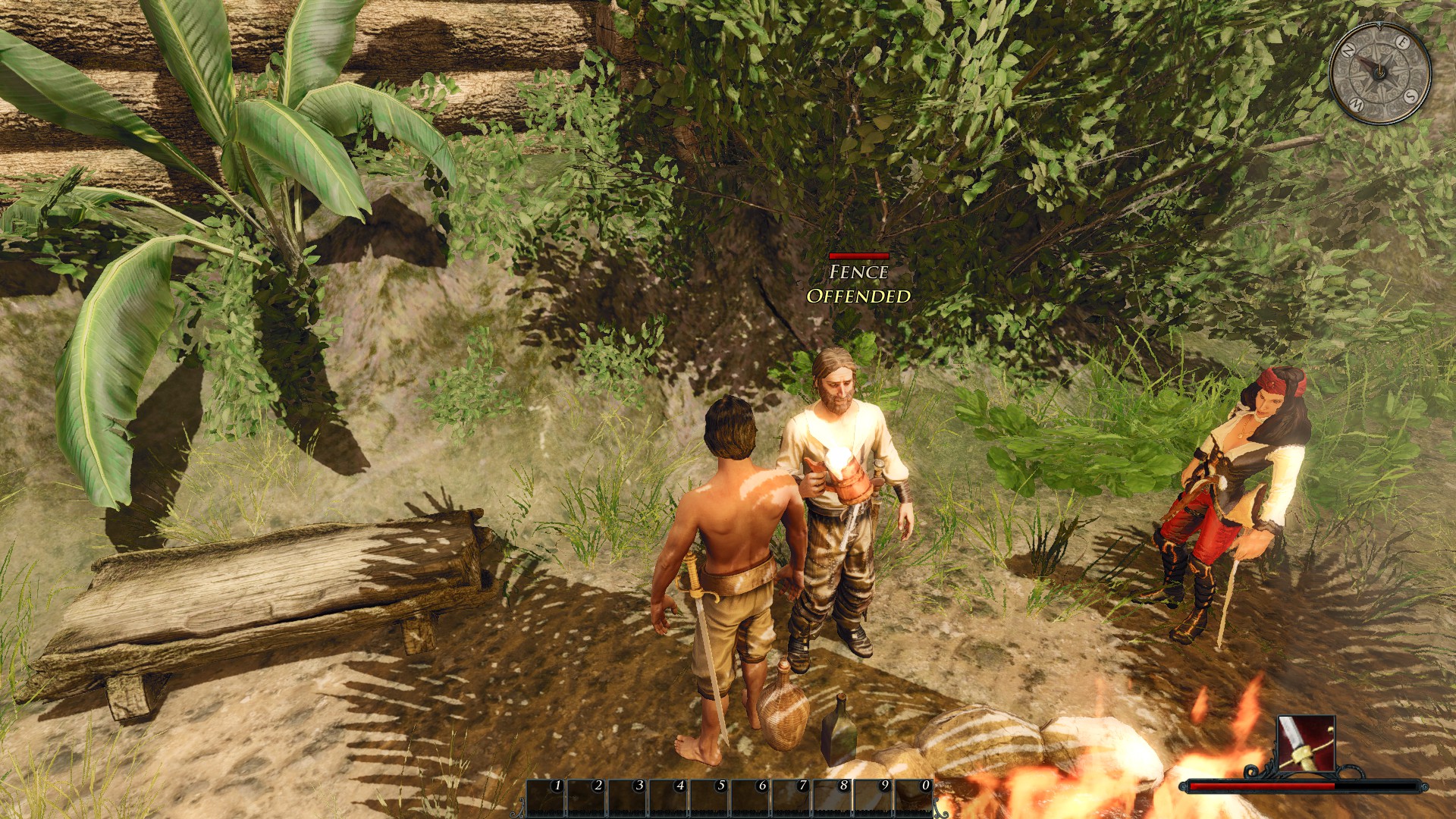
I was prepared to very much dislike this game, especially after playing a bit of Risen.  And in the first few minutes, it felt like all my fears were confirmed.  The main character is cliche and unlikable.  The sidekick is cliche and unlikable.  I decided to be a jerk, since my character is supposed to be a jerk.  But then I found out that if you kill people in this game, they just become “offended” and stop fighting you.


If you’re wondering why my character is walking around with no shirt or shoes, it’s not because I didn’t have clothing.  It’s because my clothing was pirate clothing, which my character refused to wear until he was actually a pirate – as he reminded me every time I tried equipping it.  He persisted in saying this even when we were trying to enter the pirate camp so he could become a pirate, where I would have thought pirate clothing might come in handy.

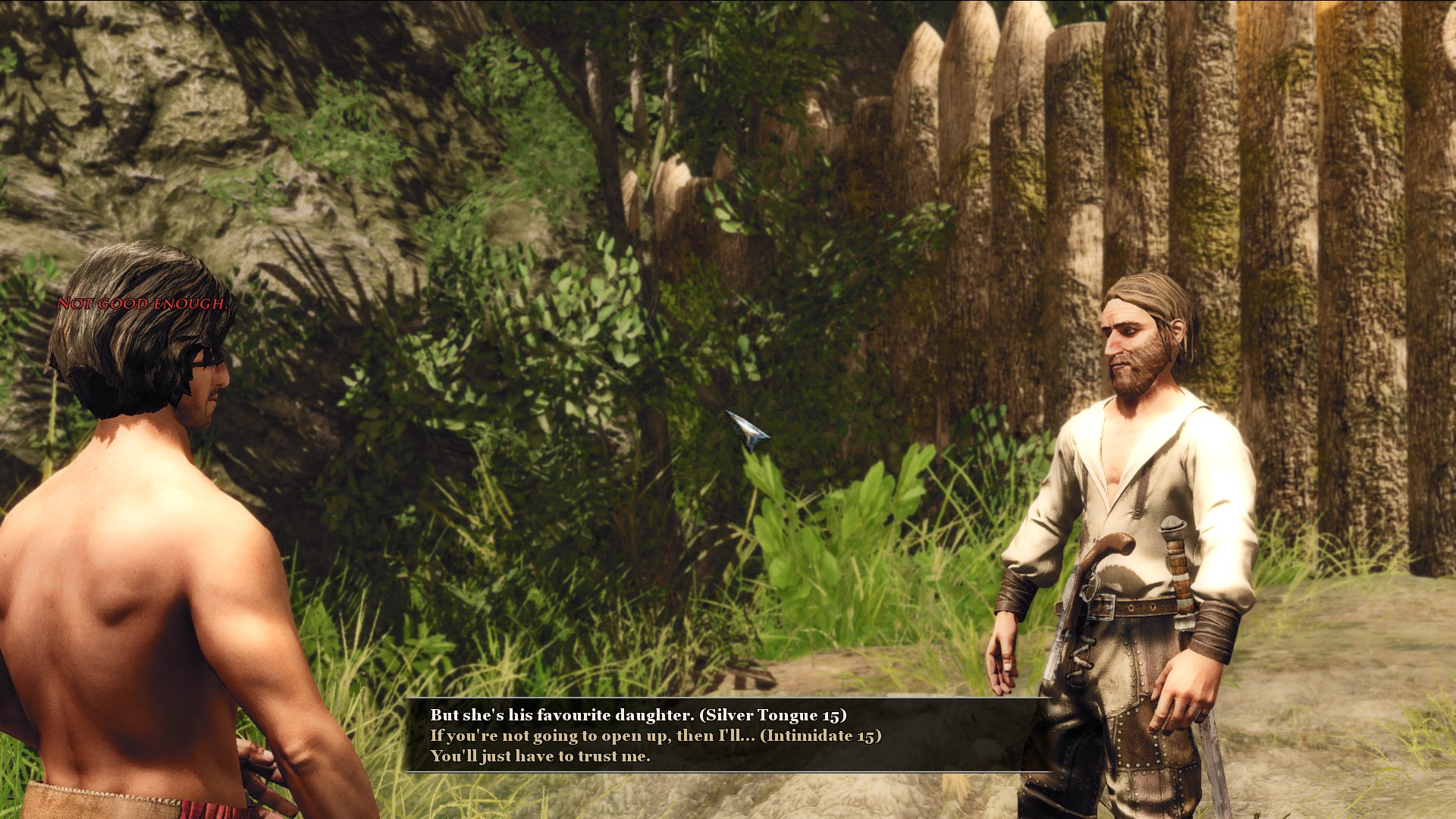
And if you’re wondering why I tried to kill the fellow in the screenshot, it’s because he wouldn’t let me into the pirate camp.  And to be fair, killing him wasn’t my first choice.  First, I tried to bluff my way in.  Well, I say bluff – I was actually telling what I believe was the truth.  But my Silver Tongue skill wasn’t high enough – so even though the option was there, I was unable to use it.  When I tried, my character just told me he wasn’t good enough to do that.


Maybe it’s a lot to expect.  But when you have an RPG, you kinda expect some amount of RPG-ing to go on.  Not an open world where only very specific things are allowed.  Where Risen seemed to have at least some number of choice and decisions to be made, Risen 2 feels like every other boring open world game out there.  Where Risen had you eaten by sea monsters when you tried to swim (which, hey, was at least an effort), Risen 2 just backs up the game about three seconds every time you enter the water.  When you can entertain yourself more by repeatedly jumping into the water while NPCs continue to talk like nothing happened, it’s a little silly.  You can also attack pretty much anybody and they’ll be fine with it ten seconds later.  So maybe I just played the game in all the wrong ways in my first hour, but most good RPGs at least give you the option to be a terrible person.

This review started out by putting Risen 2 into Tier 2, since it is pretty, fixed a bunch of issues I had with Risen (except the combat), and seemed to have at least some amount of interesting story.  Those were the reasons I didn’t feel like playing more of Risen.  But the more I think about my time playing, the less I want to return.  The more I think about it, Risen 2 seems more and more aggressively mediocre.  So Tier Three it is.

Steam link

Serpent in the Staglands

Oh, old-school RPGs.  How they hold a warm, fuzzy spot in my heart.  From Pillars of Eternity to Neverwinter Nights 2 to Ultima VII, they just epitomize what I want out of a game.  Serpent in the Staglands is a game in this same vein built by a couple – one makes the art, one writes the code.  It definitely feels like an old cRPG in many of the right ways and only a few of the bad ones.

I feel bad putting this in Tier Two, but I think I must.  Much like Avernum, it’s just a tiny bit too too rough around the edges for me to enjoy properly without putting a great deal of time into it.  And even then, I don’t know that it has enough to justify that kind of time commitment.

Steam link